
ASEAN Must Adapt Regulations to Maximize Battery Energy Storage System Value
Battery Energy Storage Systems (BESS) in ASEAN total 1.4GW, despite significant cost reductions and renewable energy growth. Evolving regulatory frameworks is essential for unlocking economic benefits and investment in BESS across the region, notably in the Philippines and Vietnam.
 Theia Market Signal Identification - AI Assisted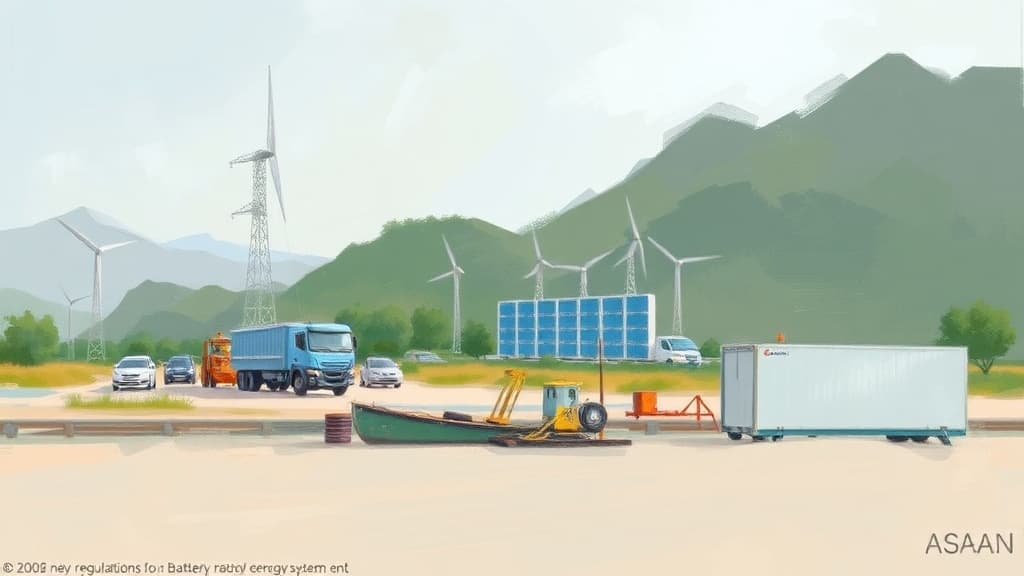
Currently, ASEAN has 1.4GW of BESS in operation, with only 400MW of projects active. This sector faces regulatory challenges due to its unique characteristics, such as rapid response times and revenue stacking capabilities.
FESSIA, established by industry leaders, emphasizes that BESS should be integral to market design and energy planning. In the Philippines, policy support has led to initial investments, while Vietnam's new decree on BESS applications marks progress.
Both countries, however, still encounter regulatory uncertainties that limit BESS potential. DNV estimates that by 2030, the Philippines could see $2.25 billion in yearly revenues from co-located solar and BESS, with Vietnam attracting $750 million in investments this year. The need for clear operational rules and revenue stacking is critical for enhancing project economics and reducing regulatory risks.


Comments