
China Faces Launch Failures Amid Global Space Developments and Australia's Investment in Gilmour Space
China's space program faced setbacks with two recent launch failures, while NASA prepared for the Artemis II mission's launch. In contrast, Australia's Gilmour Space Technologies secured AUD 217 million in funding to boost its launch capabilities, achieving a valuation over USD 1 billion amid efforts to reduce reliance on foreign providers. Additionally, Rocket Lab and Isar Aerospace encountered technical challenges, but SpaceX successfully launched the NROL-105 mission.
 Theia Market Signal Identification - AI Assisted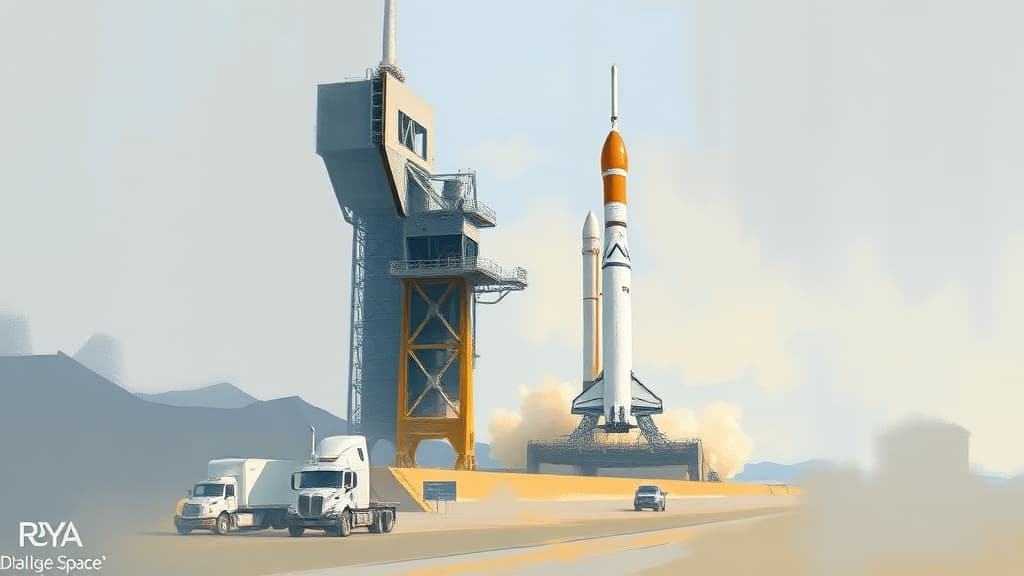
NASA has transported the Space Launch System (SLS) rocket for the Artemis II mission to the launch pad at Kennedy Space Center. Concurrently, China experienced two launch failures in quick succession, impacting its space program.
Australia’s Gilmour Space Technologies raised approximately AUD 217 million to enhance its independent launch capabilities, achieving unicorn status with a valuation exceeding USD 1 billion. The Australian government aims to reduce dependence on foreign launch providers due to geopolitical tensions and long wait times in the U.S.
Isar Aerospace postponed its Spectrum rocket test flight scheduled for January 21 due to a technical issue. Meanwhile, Rocket Lab's Neutron rocket faced structural problems during testing, but the first flight is still targeted for 2026.
SpaceX successfully launched the NROL-105 mission, while China tested the engines of its reusable Long March 12B rocket. The Artemis II mission is set for a launch window beginning February 6.


Comments