
European Small Launcher Companies Prepare for First Launches by Early 2027
European small launcher manufacturers are preparing for their first launches by early 2027, aiming to tap into a satellite market expected to triple by 2034. The European Space Agency is providing financial support, potentially up to 150 million euros per company, as existing launchers like Ariane 6 and Vega-C are deemed insufficient for market growth. Despite the emergence of new players, the economic viability of microlaunchers remains uncertain due to higher costs per kilogram compared to larger vehicles.
 Theia Market Signal Identification - AI Assisted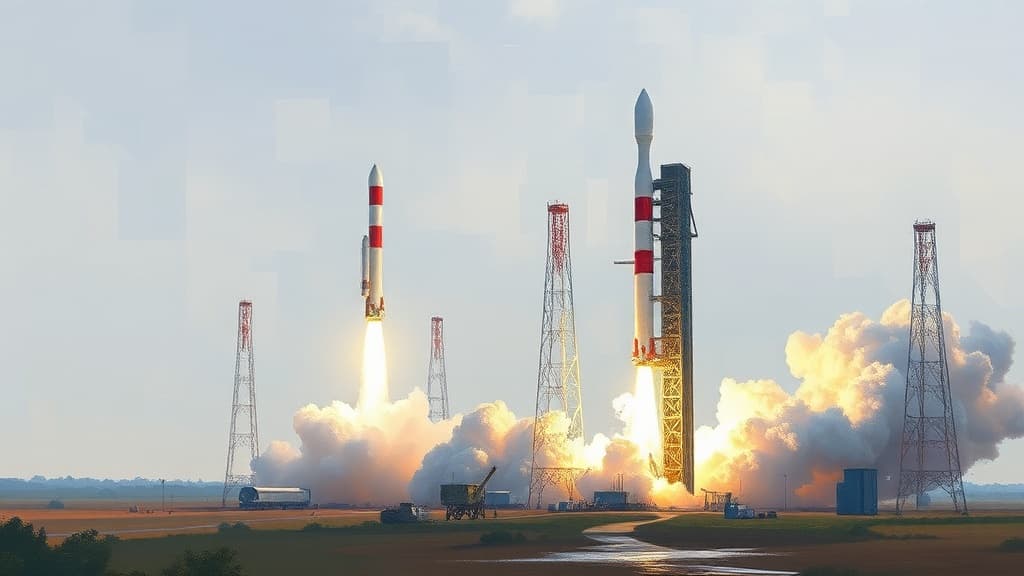
European small launcher manufacturers are set to conduct their inaugural launches by early 2027 following several delays. These companies, primarily from France, Germany, and Spain, aim to capitalize on a satellite market projected to triple from 2025 to 2034, with an estimated 43,000 satellites weighing an average of 680 kg deployed predominantly in low to medium orbits.
The European Space Agency (ESA) is supporting these initiatives, with financial backing potentially reaching up to 150 million euros per company contingent upon successful orbital launches. Currently, existing European launchers like Ariane 6 and Vega-C are insufficient for the commercial market's growth.
Among the emerging players, five out of ten small launchers are expected to survive, as they face fierce competition from heavier launchers capable of deploying multiple satellites. The economic viability of microlaunchers, defined by a payload capacity of up to 500 kg, remains a challenge as costs per kilogram are higher compared to larger vehicles.


Comments