
ICE-CSIC Study Reveals Primitive Asteroids as Key Source for Rare Earth Elements in Space Mining
A study by the Institute of Space Sciences (ICE-CSIC) suggests that undifferentiated asteroids, particularly carbonaceous chondrites, may be a more viable source for rare earth elements and transition metals than metallic asteroids. These primitive rocks contain valuable minerals and water-rich components, which could support in-situ resource utilization for space mining. However, the researchers note that practical mining technologies for these asteroids are still in development.
 Theia Market Signal Identification - AI Assisted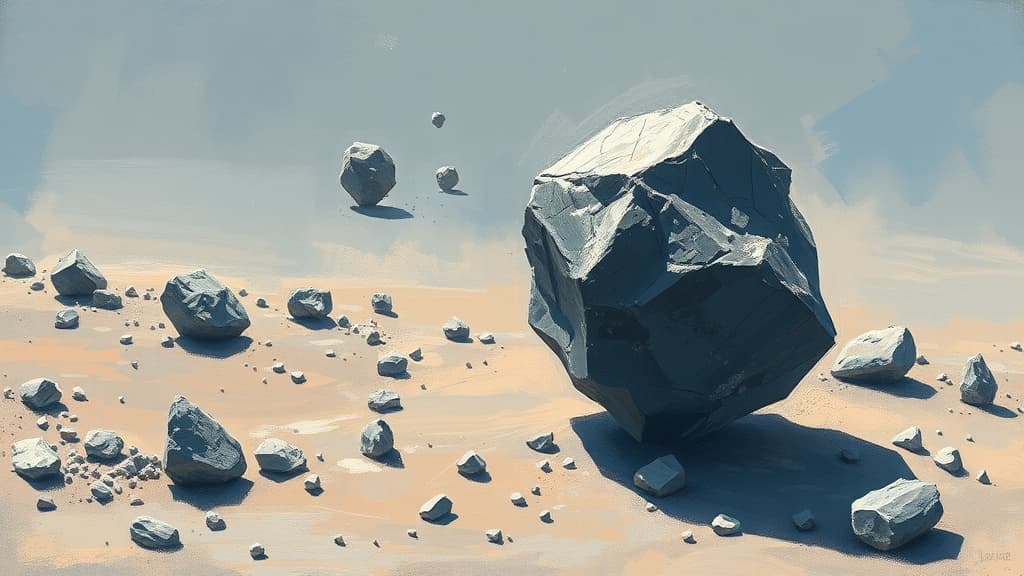
A study by the Institute of Space Sciences (ICE-CSIC) in Barcelona indicates that undifferentiated asteroids may be more promising for mining rare and critical elements than metallic asteroids. The research, published in the Monthly Notices of the Royal Astronomical Society, analyzed carbonaceous chondrites, which are remnants of C-type asteroids that have not undergone significant heating or differentiation.
The analysis found that specific subgroups of these primitive rocks contain significant amounts of transition metals such as titanium, vanadium, chromium, and zinc, as well as rare earth elements like neodymium and lanthanum. Additionally, these chondrites often contain water-rich minerals, potentially enabling in-situ resource utilization (ISRU) for rocket fuel. While the findings are promising, the authors caution that practical mining technologies for these asteroids remain undeveloped.


Comments