
Indonesia's Strategic Satellite Launch Sites: Biak and Morotai Set to Transform Global Space Industry
Biak in Papua and Morotai in North Maluku are projected to become key satellite launch gateways, strategically positioned on the equator. The initiative, backed by the National Research and Innovation Agency, aims to revolutionize the global space industry. With geographical advantages that reduce fuel costs and allow for heavier payloads, these sites promise significant benefits. However, challenges such as regulatory hurdles and environmental considerations must be addressed. Successfully establishing these launch facilities could position Indonesia as a pivotal player in the burgeoning space economy.
 Theia Market Signal Identification - AI Assisted
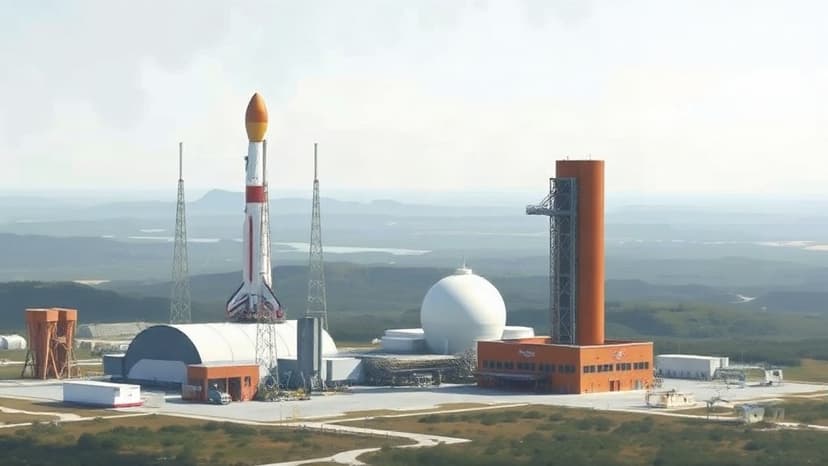
The Indonesian islands of Biak and Morotai are poised to emerge as critical launch sites for satellite operations, strategically located along the equator. This ambitious project, championed by the National Research and Innovation Agency, has the potential to reshape the global space industry, providing Indonesia with a vital foothold in the expanding space economy.
Wahyudi Hasubu, head of the Satellite Technology Research Center, highlights the preliminary feasibility studies that have identified Biak and Morotai as the most promising locations for this venture. The geographical advantages of these islands, situated close to the equator, confer significant benefits, particularly in terms of fuel efficiency during launches. This proximity allows rockets to save fuel, a consideration that could enhance payload capacities considerably.
Adhi Rahman Adiwoso, CEO of Pacific Satellite Nusantara, elaborates on these advantages, noting that a rocket launched from Biak could carry significantly heavier payloads compared to those launched from other countries. For instance, a rocket that can manage a 600 kg payload from India could handle up to 900 kg from Biak using the same engine. This increase in capacity not only enhances launch efficiency but also positions Indonesia as an attractive option for satellite deployment.
Additionally, both launch sites boast flight paths that direct rockets over open waters, minimizing risks associated with debris fall and eliminating the need for flight permissions from neighboring countries. This critical feature reduces operational risks and simplifies logistics, making the project even more appealing.
The establishment of these spaceports is considered a long-term investment, with Hasubu emphasizing that having independent launch facilities will facilitate crucial access to space. This endeavor extends beyond logistics; it encompasses the entire satellite operational spectrum, including contractual frameworks and insurance, essential for nurturing a robust space industry ecosystem.
The World Economic Forum has projected the global space economy could reach $1.8 trillion by 2035, with estimates potentially soaring to $2.3 trillion. Indonesia's active involvement in this sector is imperative to capitalize on such growth opportunities.
While the potential is promising, challenges loom on the horizon. Adiwoso points to bureaucratic and regulatory obstacles that could hinder progress, asserting that without clear regulations, substantial investments remain elusive. He has underscored a willingness to invest significantly in this initiative, contingent upon the establishment of a regulatory framework.
Environmental considerations and indigenous land rights also present significant challenges. Hasubu acknowledges the need for careful management of these issues, as indigenous land rights are protected under specific laws. Resolution of these matters will necessitate collaboration with various governmental levels, underscoring the complexity of the project.
The successful development of these satellite launch sites could yield a strategic legacy for Indonesia, enhancing its capabilities in space and establishing its role in controlling future orbital activities. As Adiwoso aptly states, mastering access to equatorial orbit may very well be the key to humanity's future in space exploration.

Comments