
Innovative Electricity-Free Cooling System Developed by KIT and Tsukuba University
A prototype of a solid-state cooling system has been developed by Karlsruhe Institute of Technology and Tsukuba University that operates without electricity, potentially transforming energy efficiency in data centers. This technology uses residual heat to activate shape memory alloy films, generating cold through a mechanical process.
 Theia Market Signal Identification - AI Assisted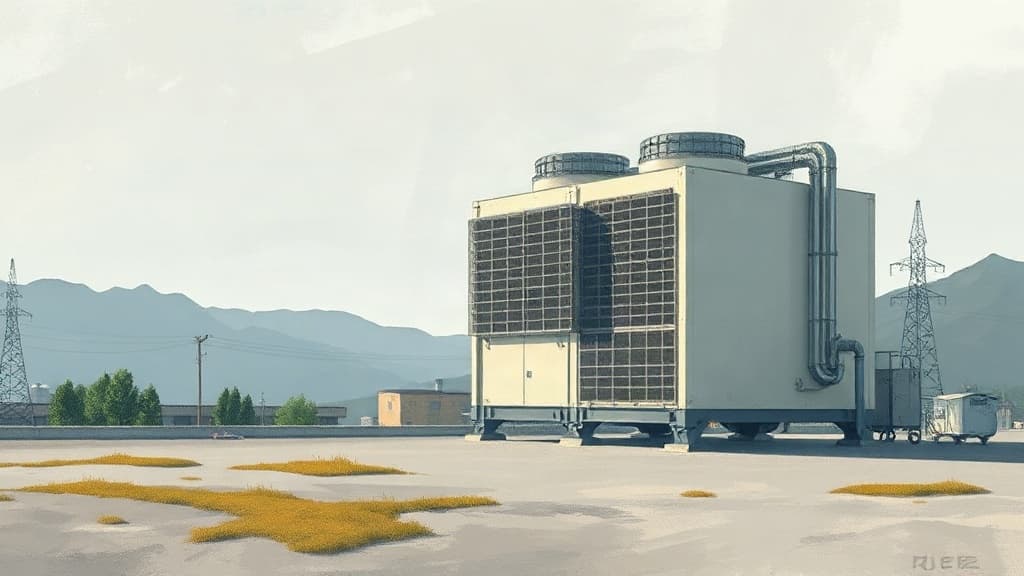
Researchers from the Karlsruhe Institute of Technology (KIT) and the University of Tsukuba have created a solid-state cooling prototype that operates without electricity. This system leverages residual heat to activate two nickel-titanium shape memory alloy films, generating cool temperatures through a mechanical process known as elastocaloric cooling.
The prototype achieved a temperature difference of 4°C using a heat source at 86°C in laboratory settings. If commercialized, this technology could significantly reduce energy consumption in data centers, which account for a substantial portion of global CO2 emissions. The next steps involve optimizing and scaling the device to enhance its cooling capacity, exploring applications in electronics and automotive systems.



Comments