
Italy's Avio to Assume Control of Vega C Rocket Operations from Arianespace
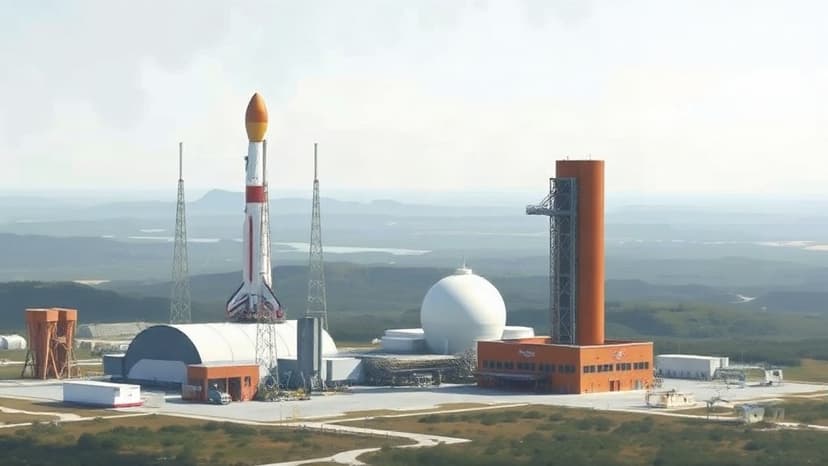
Italy's Avio is set to take over the operations of the Vega C rocket from Arianespace, under the auspices of the European Space Agency (ESA). This move comes amid Italy's exploration of potential agreements with Elon Musk's Starlink for satellite communications. ESA's director general, Josef Aschbacher, addressed concerns about diminishing European cooperation, emphasizing the importance of collaborative programs over national initiatives. Meanwhile, ESA is working to restore independent access to space following setbacks, with the next launch of the Ariane 6 scheduled for February.
 Theia Market Signal Identification - AI Assisted
Italy's Avio is poised to take the helm of the Vega C rocket operations, effectively shifting control from Arianespace, Europe’s primary launch operator, as it partners with the European Space Agency (ESA). This move reflects Italy's strategic ambitions in the aerospace sector, particularly as it considers a potential agreement with Elon Musk's Starlink for satellite connectivity.
Josef Aschbacher, the director general of ESA, recently dismissed concerns regarding a waning sense of collaboration within Europe, highlighting the critical need for unified programs. He stated, “Space is becoming more and more strategic and important,” pointing to the increasing investments in this sector. Aschbacher emphasized that participation in European initiatives is essential for national benefits, warning against the pitfalls of nationalization at the expense of broader European efforts.
The discussions around Starlink's involvement in Italy come on the heels of the European Commission's announcement of funding for the long-awaited Iris constellation, aimed at enhancing secure communications for governmental bodies across Europe. Aschbacher made it clear at a recent conference that a European approach is paramount for projects of this scale.
In a notable development, Italian Prime Minister Giorgia Meloni has fostered a close relationship with Musk, coinciding with his proximity to incoming U.S. President Donald Trump. When questioned about how Musk's potential influence might shape ESA's operations, Aschbacher remained noncommittal.
ESA has turned to SpaceX for launching several European payloads during a recent gap in local access to space. The agency, which encompasses 22 member nations and was established to streamline launcher and satellite efforts, faces a pivotal year in restoring its independent access to orbit after a series of setbacks. The Ariane 6, ESA's flagship rocket, faced delays, with its next launch now scheduled for February, significantly revised from earlier projections.
ESA officials confirmed that the agency anticipates conducting five launches in 2025, down from an initial target of six. The agency's operational integrity is further tested by the news that EUMETSAT, the European weather agency, has opted to utilize SpaceX's Falcon 9 for an upcoming satellite launch, a decision that underscores the urgency of revamping European launch capabilities.
As Avio prepares to take control of the Vega C, which made a successful return to flight in December after a previous failure, the company is set to conduct four launches in 2025, marking a significant step in Europe's quest for reliable access to space.

Comments