
MIT WPU Launches Innovative Carbon Negative Process for Green Hydrogen Production from Agricultural Waste
Researchers at MIT World Peace University have developed a groundbreaking carbon-negative process that generates both biogas and green hydrogen from mixed agricultural waste at a pilot plant with a capacity of 500 kg per day. This process, which achieves a biomass-to-gas conversion efficiency of 12%, utilizes diverse feedstocks, including millet trash, making it suitable for drought-prone regions. The technology not only addresses energy needs but also produces valuable byproducts like biochar and biofertilizers, aiming to reduce reliance on chemical fertilizers. With industry interest for technology transfer, this innovation could significantly impact India's green hydrogen mission.
 Theia Market Signal Identification - AI Assisted
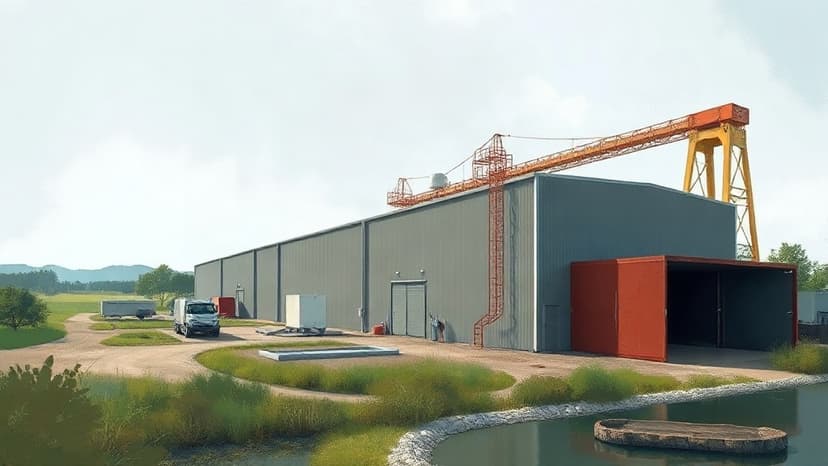
At MIT World Peace University, researchers have made a significant leap in sustainable energy production by establishing a fully scalable pilot plant capable of generating 500 kg of biogas and green hydrogen daily. Under the guidance of Dr.
Ratnadip Joshi, the team has pioneered a carbon-negative process that utilizes mixed agricultural waste, marking a departure from traditional biomass-to-gas conversion methods that often yield only 5-7% efficiency. This innovative approach achieves a remarkable 12% efficiency, demonstrating a viable solution for energy independence in regions plagued by agricultural waste and low rainfall.
What sets this process apart is its ability to leverage a variety of feedstocks, including seasonal crop residues like millet trash, rather than relying solely on single feedstocks such as paddy straw. This versatility makes it particularly advantageous for drought-prone areas, as explained by Dr.
Joshi. The biogas produced boasts high methane content, which is then converted into green hydrogen using a plant-derived catalytic pyrolysis system, all while avoiding carbon dioxide emissions and eliminating the need for costly carbon capture technologies.
Moreover, this pilot project not only addresses energy production but also generates valuable byproducts such as biochar and biofertilizers. The latter, developed through patented technology, offer a sustainable alternative to conventional fertilizers, reducing dependence on urea and mitigating soil salinity issues that threaten agricultural productivity. Ph.D. researcher Aniket Patrikar emphasized the significance of using a pyrolysis catalyst derived from plants to achieve these carbon-negative outcomes.
Colleague Avinash Lad highlighted the financial implications of this technology, noting that while electrolysis for hydrogen production remains expensive, this new process could potentially lower production costs to $1 per kilogram—less than half the current benchmark. The innovation has captured the attention of the energy sector, prompting interest from major companies in establishing partnerships for technology transfer.
With four patents already granted, this breakthrough could play a crucial role in supporting India’s national green hydrogen mission, aimed at achieving a production target of 5 million tons per annum by 2030. As the world accelerates its shift toward sustainable energy, MIT WPU's pioneering research stands out as a beacon of potential, promising to empower not just the energy sector but also the agricultural landscape, all while contributing to the global fight against climate change.



Comments