
NASA's VIPER Rover Advances Testing with Sandia National Laboratories for Lunar Water Mapping
NASA's VIPER rover, tasked with mapping lunar water, has reached a crucial testing milestone with assistance from Sandia National Laboratories. Utilizing Sandia's Superfuge centrifuge, the team evaluated the rover's structural integrity to ensure it can withstand the rigors of launch and lunar conditions. Scheduled for delivery to the Moon's South Pole by late 2027, the rover will employ advanced instruments to detect water concentrations and drill up to one meter beneath the surface.
 Theia Market Signal Identification - AI Assisted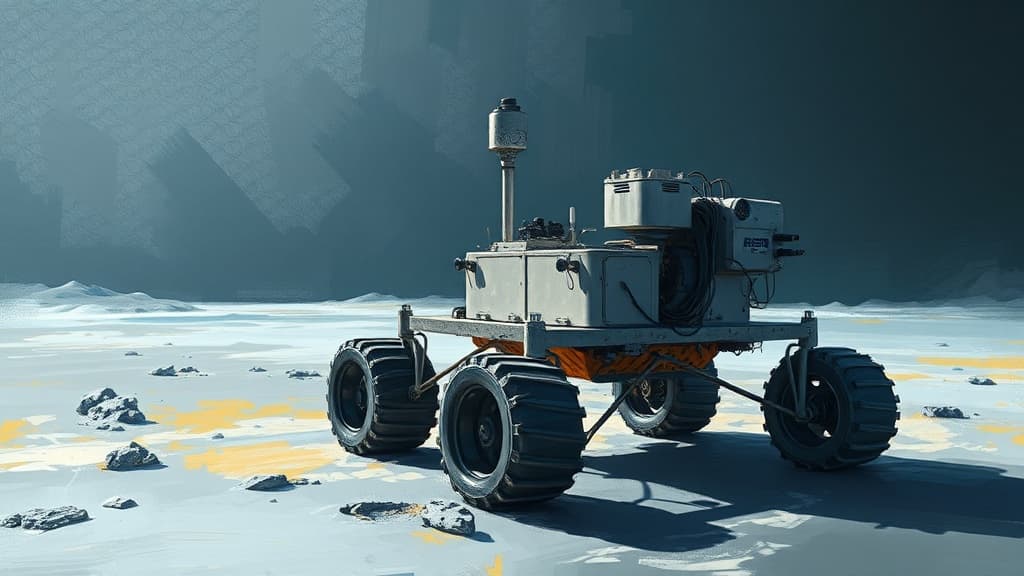
NASA's VIPER rover, designed to map water on the Moon, has achieved a significant milestone with support from Sandia National Laboratories. The rover must be certified for its mission, ensuring its structure can withstand launch and lunar conditions.
Sandia's Superfuge centrifuge, capable of generating forces up to 300 G, has been instrumental in testing the vehicle. Over three weeks, the NASA team conducted tests to evaluate the rover's structural integrity, addressing the challenges posed by its size and sensitive components.
The Superfuge team prepared the tests, collecting 48 data points for analysis. The rover, scheduled for delivery to the Moon's South Pole by Blue Origin in late 2027, is equipped with instruments to detect water concentration and will drill up to one meter below the surface. The project aims to provide crucial data on lunar water deposits, which is essential for future exploration.


Comments