
Northern Sea Route Set to Transform Global Trade by 2030
The Northern Sea Route is projected to become a year-round navigable passage between Europe and Asia by 2030, driven by Arctic ice melt and the development of key ports like Murmansk and Sabetta. These ports are enhancing their capacities to accommodate larger vessels and increase cargo volumes, presenting a shorter alternative to the Suez Canal for Russian shipping companies. However, concerns over geopolitical tensions and the potential impact on the fragile Arctic ecosystem remain prominent.
 Theia Market Signal Identification - AI Assisted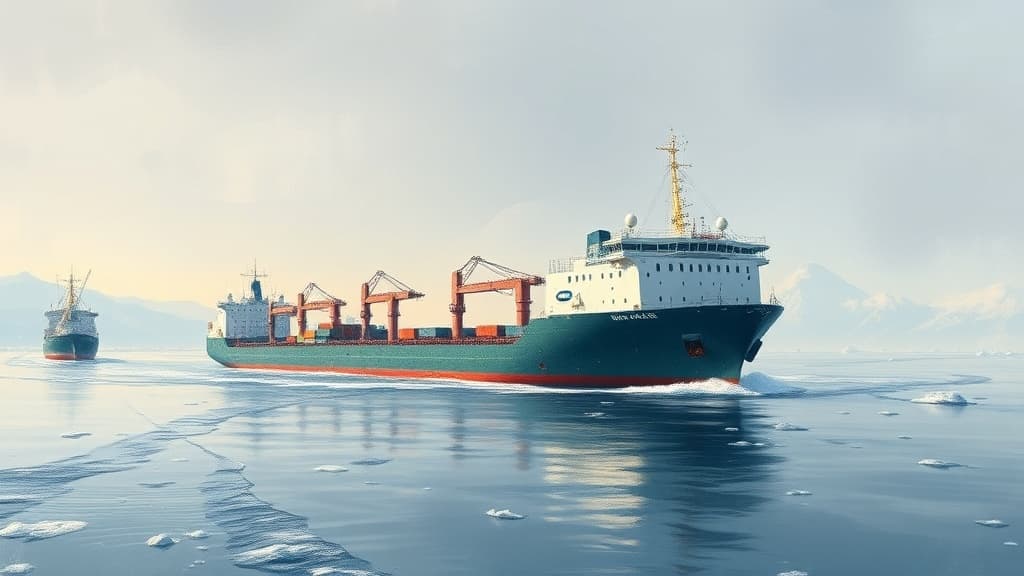
The Northern Sea Route (NSR) will become a year-round navigable passage between Europe and Asia within a decade due to Arctic ice melt. Key ports along the route, including Murmansk, Sabetta, and Dudinka, are being developed as commercial centers.
Murmansk, with its year-round ice-free port, will accommodate vessels up to 300,000 tons and will feature a coal transshipment terminal with an annual capacity of 18 million tons. Sabetta houses an LNG terminal operational since 2018 and is the only year-round airport on the NSR.
The NSR offers a shorter route than the Suez Canal, benefiting Russian shipping companies. However, geopolitical tensions exist, particularly with Western nations wary of increased Russian control of the route. By 2025, significant cargo volumes are expected to transit the NSR, impacting both trade and the fragile Arctic ecosystem.

Comments