
Russia's LNG Strategy Faces Challenges Amid Arctic Icebreaker Limitations
Russia's strategy to boost Arctic liquefied natural gas (LNG) exports faces significant challenges due to limitations in icebreaker availability and operational delays. Despite plans to triple LNG production by 2030, the deployment of all nuclear icebreakers during the winter of 2025-2026 led to disruptions, including a temporary halt of the Arctic LNG 2 project. With only about ten of the required 15-17 icebreakers available, concerns grow over the reliability of the Northern Sea Route amid increasing demand and sanctions.
 Theia Market Signal Identification - AI Assisted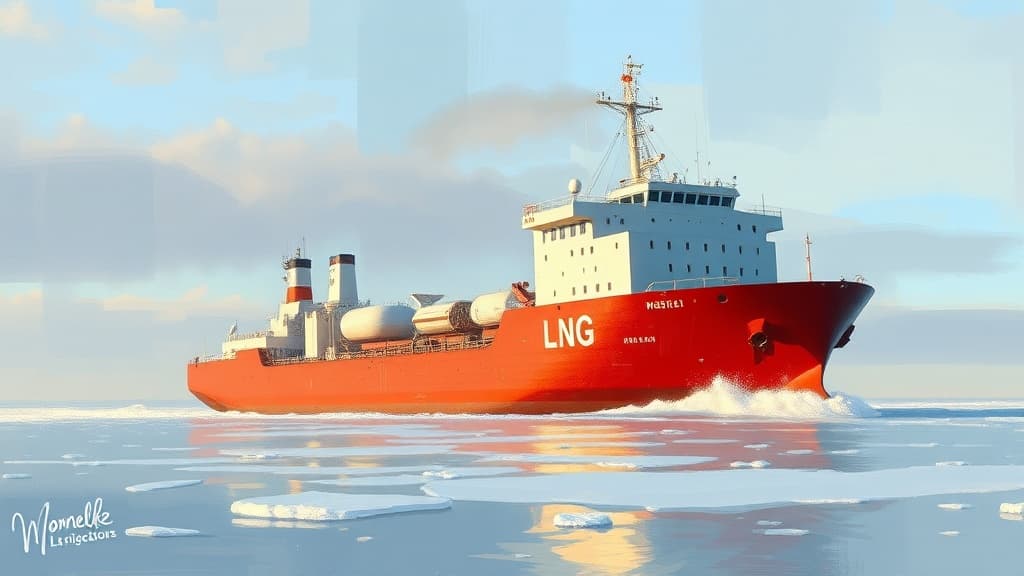
Russia is shifting its energy strategy towards Arctic liquefied natural gas (LNG) exports via the Northern Sea Route (NSR) following the EU's decision to phase out Russian pipeline gas by the end of 2027. The Kremlin aims for 100 million tons of LNG per year by 2030, a threefold increase from 2023, with key projects including Yamal LNG and Arctic LNG 2.
However, operational difficulties emerged during the winter of 2025-2026 as all eight nuclear icebreakers were deployed, yet LNG tankers faced delays. The first liquefaction train of Arctic LNG 2 was temporarily halted due to full storage and a lack of available Arc7-class icebreaking tankers, exacerbated by US and EU sanctions.
Although the modern Project 22220 icebreakers can cut through ice up to three meters thick, technical capability does not address transport chain bottlenecks. Russia plans to increase NSR freight volumes to 130-150 million tons by 2035, requiring 15-17 icebreakers, but only about ten are currently available. This discrepancy raises concerns about the reliability of the strategy in an unpredictable Arctic environment.
Comments