
SpaceX Conducts Critical Test Fire Ahead of Upcoming Starship Launch
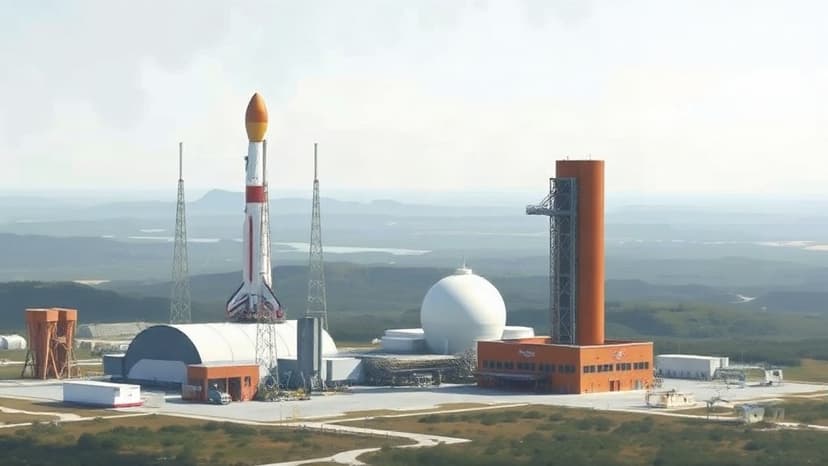
SpaceX has completed a significant static test fire of its Super Heavy rocket booster at its South Texas facility, a key step before the next Starship launch. Although no specific date for Flight 11 has been announced, Elon Musk aims to increase testing frequency. The recent test follows a successful launch on August 26, which marked a productive milestone for the Starship program, demonstrating crucial capabilities in deploying satellites and engine reignition in space. SpaceX continues to refine its ambitious plans for future missions to the Moon and Mars.
 Theia Market Signal Identification - AI Assisted
SpaceX has recently executed a pivotal static test fire of its Super Heavy rocket booster at its South Texas test facility, a crucial precursor to its next Starship launch. While an official date for Flight 11 remains undisclosed, CEO Elon Musk has expressed his intention to accelerate testing to one or more launches per month. This latest test comes on the heels of a successful demonstration on August 26, which showcased not only the most effective flight of the Starship system in 2025 but also marked a significant rebound after a series of earlier unsuccessful flights.
The Super Heavy booster fired 33 Raptor engines for approximately ten seconds, a standard procedure in the lead-up to launches, ensuring the booster’s safety and reliability. Following this test, SpaceX is expected to conduct further test firings of the Starship’s upper stage, as was the case before Flight 10. The company's approach to rapid and frequent testing, even amidst setbacks, aligns with Musk’s philosophy that such trials yield invaluable data for design improvements.
The August launch was a remarkable achievement; the upper stage successfully separated and completed key milestones, including deploying eight mock Starlink satellites and reigniting one Raptor engine in space—an essential maneuver for reentry. After a controlled descent, the Starship exploded upon landing in the ocean, while the Super Heavy booster completed its mission with a planned water landing in the Gulf of Mexico.
SpaceX’s Starship, the world’s largest launch vehicle, stands at 403 feet when fully stacked. It is designed to be a fully reusable transportation system, critical to Musk’s vision of sending humans to Mars and supporting NASA’s Artemis program, which aims to return astronauts to the Moon. With government support easing regulatory pathways, SpaceX is poised for an ambitious future in space exploration, with an uncrewed mission to Mars targeted for 2026 and lunar operations set for 2027.
Starbase, the company’s headquarters and site of these developments, has garnered attention not only for its technological advancements but also for its recent recognition as a municipal entity, granting it a degree of local governance. As SpaceX continues to navigate the complexities of commercial spaceflight, the innovations emerging from this Texan locale are set to play a defining role in the future of space exploration.


Comments