
US-UK Partnership Aims to Revitalize Nuclear Power Investment Amidst Criticism of Energy Policies
US President Donald Trump and UK Labour leader Sir Keir Starmer have found common ground in their support for nuclear power. The US and UK governments announced plans to expedite the approval of new nuclear reactor designs, aiming to foster significant investments in the sector. Despite the promise of advanced modular reactors and small modular reactors, industry experts caution that current agreements lack binding commitments. A report suggests that reducing bureaucratic hurdles is essential for making nuclear power a viable and cost-effective solution for the UK's energy needs.
 Theia Market Signal Identification - AI Assisted
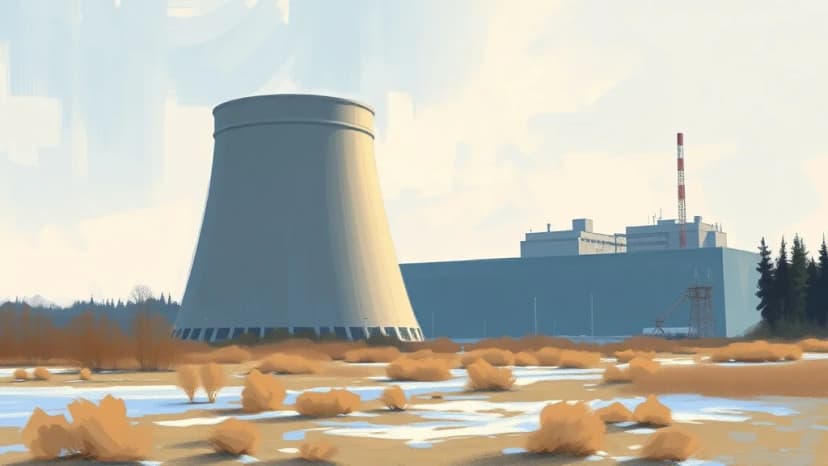
Amidst a backdrop of sharp criticism from US President Donald Trump regarding British energy policies—particularly concerning wind farms and taxes on North Sea oil and gas—a surprising alignment has emerged between him and UK Labour leader Sir Keir Starmer: a shared enthusiasm for nuclear power. This week, the US and UK governments unveiled a cooperative initiative aimed at ushering in a new era of privately financed nuclear power plant construction. The agreement proposes a streamlined process for approving advanced reactor designs by allowing both countries to recognize each other's safety standards, a move that has already drawn criticism from environmental activists.
The announcement coincided with a showcase of substantial investments being considered by American and British firms. British Gas owner Centrica and nuclear startup X Energy, with backing from Amazon, are exploring the construction of up to 80 advanced modular reactors (AMRs) that promise to deliver electricity and heat to both industries and households.
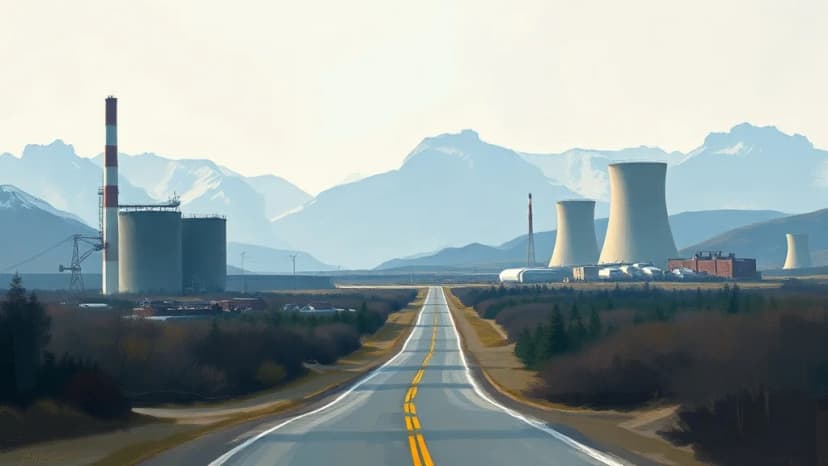
Additionally, Holtec International and EDF's UK branch are contemplating the establishment of a small modular reactor (SMR) on the site of a former coal power plant in Nottinghamshire. Other initiatives include plans by micro-reactor firm Last Energy to supply power to the London Gateway port and Bill Gates-backed TerraPower scouting locations for mini power plants.
While the prospect of these developments appears promising for the UK government, industry veterans emphasize that the current arrangements are merely informal commitments, lacking the binding contracts or financial exchanges that would solidify them. A report from the pro-growth campaign group Britain Remade suggests a potential path forward, asserting that nuclear energy could provide abundant, clean, and reliable electricity, as well as lower consumer bills—provided that the government undertakes a significant overhaul of the existing regulatory framework.
Sam Dumitriu, the report's author, underscores the urgency of transforming intentions into tangible projects. He notes that while there is strong interest from US firms to invest in the UK, the realization of these projects hinges on making the country a more attractive and efficient environment for construction.
Unlike renewable sources such as wind and solar, nuclear power offers continuous energy output and occupies a fraction of the land for the same energy yield, making it a compelling option as the UK seeks to decarbonize its energy landscape. However, Dumitriu's findings reveal a stark reality: the UK currently stands as the most expensive location worldwide for building nuclear power stations, a barrier that must be addressed for the envisioned nuclear renaissance to materialize.


Comments