
Western Australia's Revegetation Projects Gain Importance Amid Record Heat
As temperatures in Western Australia reach record highs, revegetation efforts led by the Moore Catchment Council (MCC) are becoming essential in combating climate challenges. Community Landcare Coordinator Rachel Walmsley conducts experiments demonstrating the cooling effects of trees. This year, the MCC planted 90,000 seedlings to stabilize soils, improve water quality, and provide habitat for endangered species. Successful projects at Cudoralcarra Lake and Yagalain Farm highlight the tangible benefits of these initiatives, including reduced dust and increased wildlife, particularly for Carnaby's black cockatoos.
 Theia Market Signal Identification - AI Assisted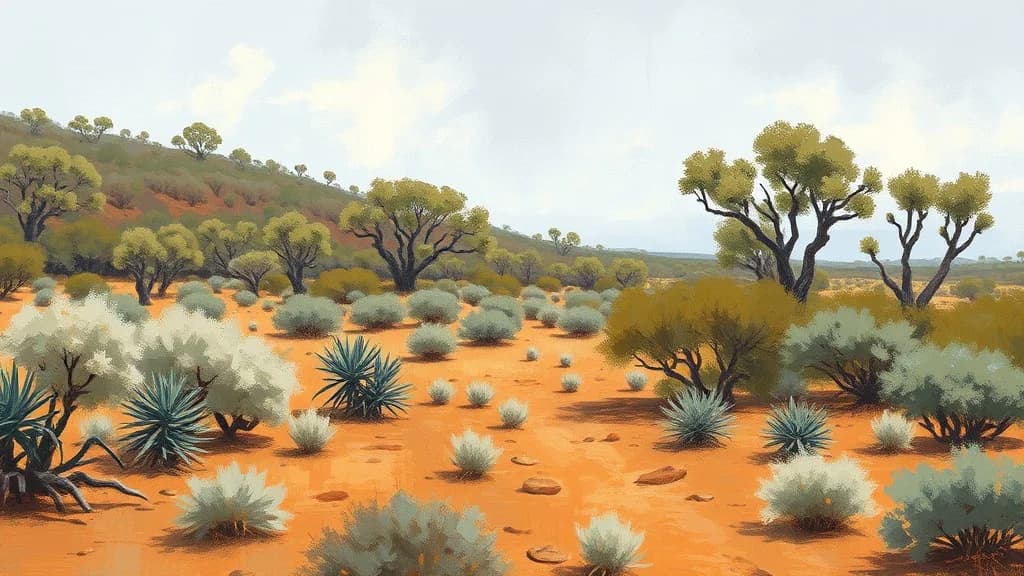
As temperatures in Western Australia continue to soar, reaching unprecedented levels, the significance of revegetation projects led by the Moore Catchment Council (MCC) cannot be overstated. According to the Bureau of Meteorology, the summer of 2024-25 was the hottest recorded since 1910, underscoring the urgent need for initiatives that enhance climate resilience. Each year, Rachel Walmsley, the MCC's community Landcare coordinator, conducts experiments that vividly illustrate the cooling effects of trees on ground temperatures during the scorching months.
In one notable experiment last February, an air temperature of 46 degrees Celsius yielded a ground temperature of 82.1 degrees in full sun, compared to a much cooler 43.3 degrees under a tree's shade. This year, the MCC took proactive measures by planting 90,000 seedlings across 90 hectares, a response to the extreme heat and prolonged drought conditions that have plagued the region. These plantings aim to stabilize soils, enhance water quality, and restore essential habitats for native fauna, particularly the endangered Carnaby's black cockatoo.
The MCC's projects have positively impacted various farms, with dramatic improvements seen in both Moora and Calingiri. At Cudoralcarra Lake, where decades of overgrazing had left the landscape vulnerable, the MCC collaborated with the Hamilton family in 2015 to initiate restoration efforts.
Initial attempts to plant Nypa grass were hampered by dryness, but over the years, tens of thousands of native trees and shrubs, including melaleucas and eucalypts, were successfully planted with local support. The results have been transformative; dust storms are now a thing of the past, as stabilized soils promote natural regeneration of indigenous flora.
Walmsley notes a resurgence in bird and insect life, critical indicators of ecological health, as Carnaby’s black cockatoo finds new forage within the thriving vegetation. Landowner Jim Hamilton expressed satisfaction with the transformation, stating that the dust that once plagued local crops has been significantly reduced.
Further south, at Yagalain Farm, efforts to rehabilitate a degraded creekline have also yielded promising results. After contacting the MCC, farmers Pete Brown and Catherine Stone initiated the restoration of land that had been cleared years prior. Recognizing its unsuitability for cropping, they opted to reintroduce native plants to bolster wildlife, particularly for the endangered black cockatoos.
Funded by the state’s natural resource management program, the MCC fenced and revegetated the creek, with planting occurring in the winter of 2023. Two years later, the flourishing growth of native flora serves as a testament to the project's success, inspiring others to consider similar initiatives for creek rehabilitation. Walmsley reflects on the rewarding nature of her work, noting the vibrant landscape that greets her every day as a sign of both ecological recovery and community commitment to sustainable practices.


Comments