
Argonne National Laboratory Enhances ATLAS Experiment at CERN's LHC
Argonne National Laboratory has played a pivotal role in the ATLAS experiment at CERN’s Large Hadron Collider for over 30 years, contributing to the design and upgrades of the 8,000-ton detector. As part of preparations for the High-Luminosity LHC project, researchers are enhancing key components and adapting ATLAS-related code for exascale computing systems like the Aurora supercomputer, aiming to significantly boost data analysis capabilities. The ongoing work seeks to advance understanding in particle physics and explore phenomena beyond the Standard Model, including dark matter.
 Theia Market Signal Identification - AI Assisted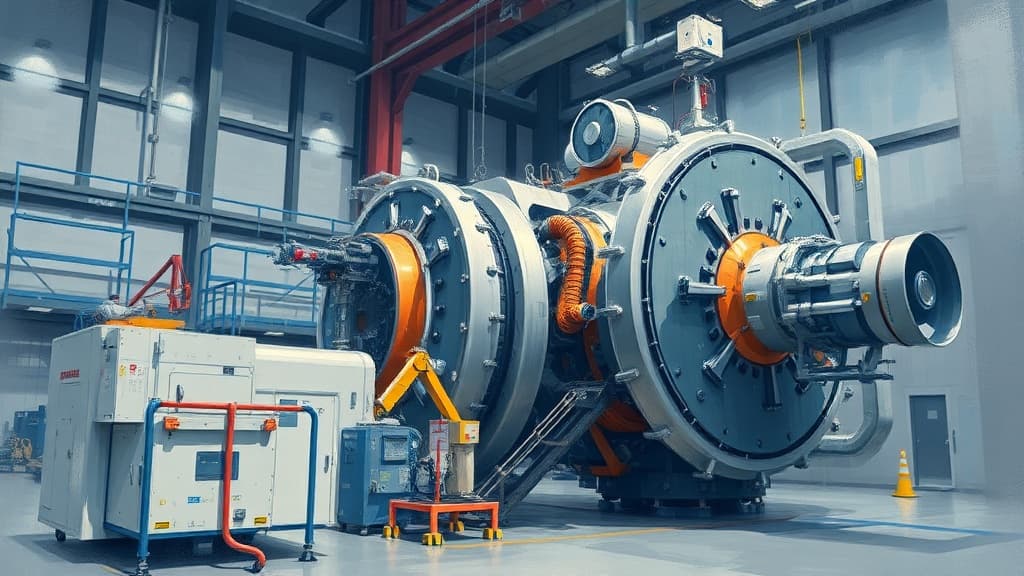
Argonne National Laboratory has contributed to the ATLAS experiment at CERN’s Large Hadron Collider for over 30 years, assisting in the design, construction, and upgrades of the ATLAS detector. The detector, which started data recording in 2009, weighs approximately 8,000 tons and utilizes over 100 million sensors to analyze particle collisions.
Argonne researchers have developed advanced technologies for data processing and are currently upgrading crucial detector components in preparation for the HL-LHC project, which will increase data output by twenty-fold. The collaboration is also adapting ATLAS-related code for exascale computing systems, particularly the Aurora supercomputer, to enhance data analysis capabilities. The ATLAS experiment aims to further explore particle physics and potential discoveries beyond the Standard Model, including dark matter.




Comments