
Bacton Gas Terminal Positioned as a Potential Carbon Capture and Hydrogen Production Hub
The Bacton gas terminal in Norfolk, a significant contributor to the UK’s gas supply, is being considered as a potential hub for carbon capture and hydrogen production, according to local energy leaders. With the government's recent investment in carbon capture and storage (CCS) initiatives, experts believe Bacton could effectively utilize its existing infrastructure to reduce emissions and support sustainable energy goals. However, environmental groups express concerns that CCS may prolong reliance on fossil fuels. The terminal's future could include hydrogen production, positioning it as a key player in the UK’s energy transition.
 Theia Market Signal Identification - AI Assisted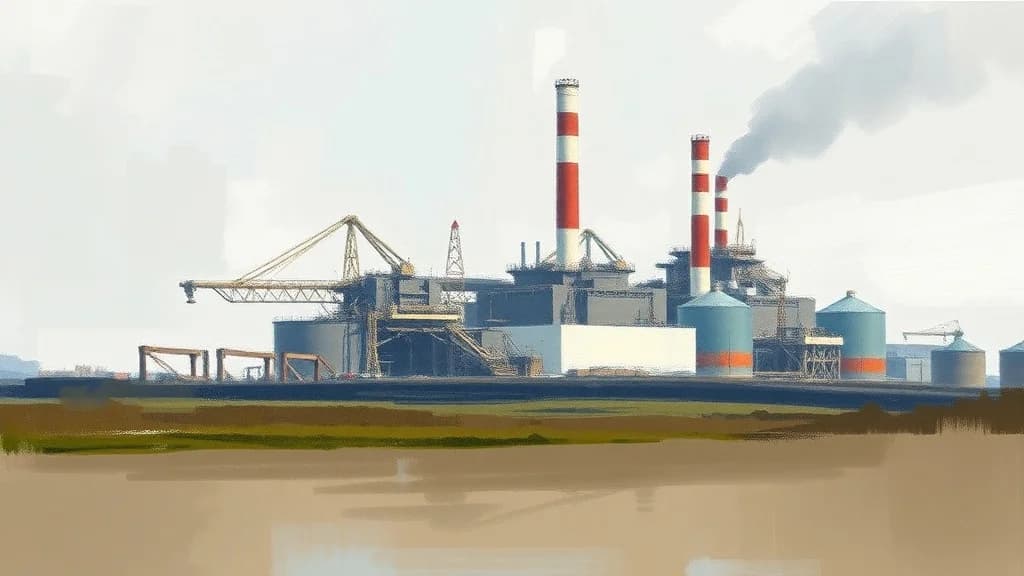
The Bacton gas terminal, a critical site supplying approximately one-third of the UK’s gas, is emerging as a potential hub for carbon capture and hydrogen production, according to local energy experts. Kevin Keable, chair of the East of England Energy Group, highlighted the terminal's unique position to harness the same reservoirs that currently supply natural gas for the storage of excess carbon dioxide (CO2). This initiative is viewed as essential for achieving net-zero emissions, as Keable emphasized the necessity of capturing and storing carbon for environmental sustainability.
In a significant stride towards climate goals, the UK government has pledged nearly £22 billion to projects focused on carbon capture and storage (CCS). Despite this commitment, organizations like Greenpeace and Friends of the Earth express skepticism, warning that CCS could merely extend the life of fossil fuel dependency, potentially undermining efforts to combat global warming.
Jonathan White, General Manager of Perenco, which operates one of Bacton’s terminals, is co-leading the Poseidon project aimed at piping surplus CO2 into the Leman gas field off the Suffolk coast. He explains that substantial emissions from natural gas and industrial processes, such as those from cement and waste incineration, could be mitigated if captured and stored offshore. White believes Bacton is well-equipped to implement a CCS system, leveraging its skilled workforce and existing gas infrastructure.
While Perenco has not yet developed formal facilities for carbon capture, it has successfully tested the technology by injecting 4,000 tonnes of liquid CO2 into the Poseidon site, demonstrating its feasibility. However, critics, including environmental activists, caution that CCS may not scale rapidly enough to significantly impact global carbon emissions, which exceed 35 billion tonnes annually, with only about 50 million tonnes currently captured across 45 global CCS sites.
Looking ahead, Keable envisions Bacton could begin hydrogen production by 2030. Hydrogen offers the promise of a cleaner energy source, emitting no greenhouse gases upon use. However, the production of hydrogen can involve burning natural gas, known as blue hydrogen, although greener alternatives, such as green hydrogen derived from surplus renewable energy, are also viable.
The ambition is clear: Bacton could evolve into a pivotal energy gateway for the UK, simultaneously addressing carbon emissions, fostering job security, and contributing to the transition towards a more sustainable energy landscape.


Comments