
Canada's Strategic Path to Energy Security: Embracing Nuclear Power and International Collaboration
Canada faces the dual challenge of strengthening its domestic energy supply chain while achieving ambitious environmental targets. The nation must focus on a diverse energy mix, including nuclear energy, to reach net-zero emissions by 2050. Investments in advanced nuclear fuels and collaboration between federal and provincial governments are essential for enhancing energy security and reducing reliance on single sources. As Canada explores small modular reactors and other innovations, effective partnerships, regulatory support, and international cooperation will be crucial for realizing its potential as an energy superpower.
 Theia Market Signal Identification - AI Assisted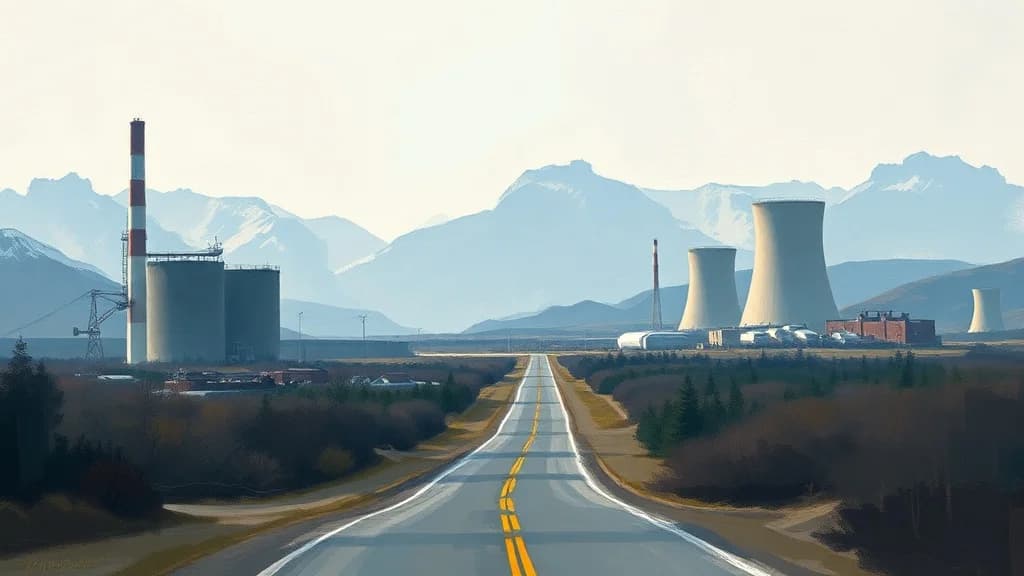
Canada stands at a critical juncture, tasked with fortifying a reliable domestic energy supply while fostering international collaboration. Geopolitical tensions have intensified the urgency of this mission, underscoring the importance of a diverse energy mix to achieve the country's net-zero target by 2050.
Among various energy sources, nuclear power emerges as a key player, particularly through the development of advanced nuclear fuels such as high assay low enriched uranium (HALEU) and low enriched uranium (LEU). These innovations promise to enhance Canada’s energy security by diversifying the nuclear fuel supply chain, thereby mitigating geopolitical risks.
To maintain momentum, utilities, developers, and suppliers are looking to government at both federal and provincial levels for clear commitments to support the nuclear supply chain. In Ontario, significant projects like the refurbishment of existing reactors at Darlington, Bruce, and Pickering, alongside the pioneering Darlington small modular reactor (SMR), signal a commitment to advancing nuclear technology. This project, expected to be the first of its kind in the Western world, will not only bolster domestic energy capacity but also position Canada as a leader in nuclear expertise and supply chains.
Meanwhile, the Ford government’s recent budget highlights a commitment to energy diversification, including an expansion of renewable procurement targets. Though provinces like Alberta and New Brunswick have yet to allocate specific funds for nuclear initiatives, they express interest in exploring investment opportunities.
New Brunswick's investigation into SMR options, particularly with projects like the ARC 100, exemplifies the potential for growth if financial backing continues. Similarly, Alberta plans to assess SMR viability through public consultations set for 2025.
In Saskatchewan, SaskPower’s decision to consider the GE Hitachi BWRX-300 SMR for potential deployment further illustrates the momentum building around nuclear energy. A decision on construction is expected by 2029, with site evaluations underway near Estevan.
On the federal front, recent legislative changes, including Bill C-5, signal a commitment to enhancing energy projects, particularly nuclear initiatives. This bill aims to improve interprovincial trade, facilitating collaboration among provinces in deploying nuclear energy, while ensuring that regulatory oversight from the Canadian Nuclear Safety Commission remains intact.
Canada has the potential to emerge as a global energy superpower, particularly in the nuclear sector, given its established reputation and expertise. Achieving this vision requires cohesive action from all levels of government to provide regulatory support, infrastructure investment, and ongoing dialogue with industry stakeholders.
As the commercial HALEU market shifts away from dependence on Russia, Canada has the opportunity to strengthen ties with international partners, including the UK and EU nations, which are also advancing in this field. By effectively leveraging its abundant energy resources, Canada can reinforce its economic stability and sovereignty while aligning with climate goals and ensuring a diverse energy supply for the future. The role of nuclear energy—and particularly advanced fuels like HALEU and LEU—will be pivotal in shaping a sustainable and secure energy landscape for Canada.


Comments