
CANDU: The Innovative Canadian Nuclear Reactor That Struggled to Gain Traction
CANDU, a nuclear reactor design developed by Atomic Energy of Canada Limited, utilizes natural uranium and heavy water, allowing operation without uranium enrichment. Despite its advantages, including high capacity factors and on-line refueling, CANDU struggled with high construction costs and competition from light water reactors, leading to limited global adoption. Recently, Candu Energy has shifted focus to developing Small Modular Reactors (SMRs) to address future energy needs.
 Theia Market Signal Identification - AI Assisted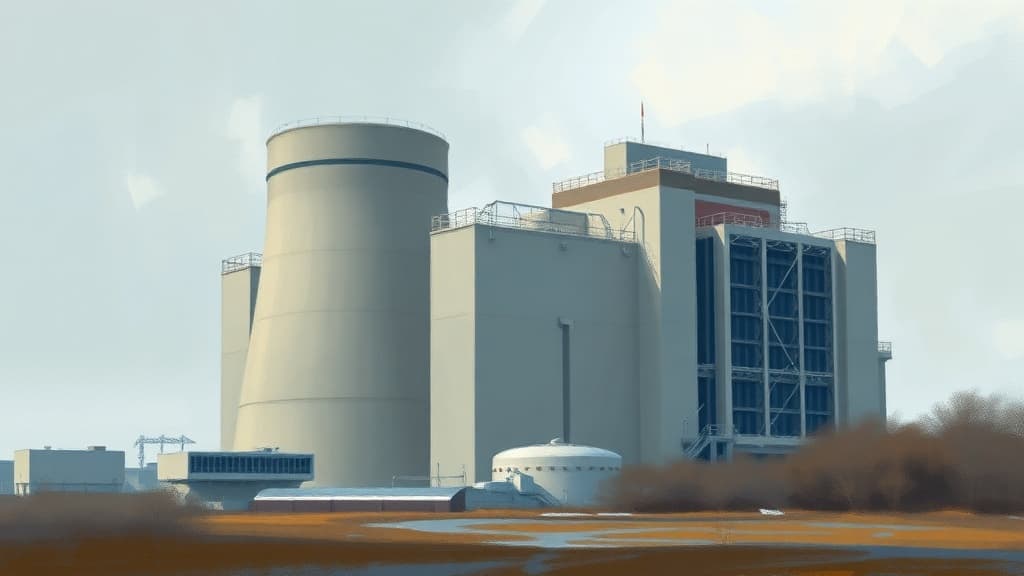
CANDU, developed by Atomic Energy of Canada Limited (AECL), is a nuclear reactor design that utilizes natural uranium and heavy water as a moderator, enabling it to operate without uranium enrichment. CANDU's first pilot reactor achieved criticality in 1962, and subsequent plants, including Douglas Point and Pickering, were built in Ontario, contributing significantly to the region's electricity supply.
Despite its advantages, including high capacity factors and on-line refueling, CANDU faced challenges such as high upfront construction costs and competition from light water reactors (LWRs), which improved over time. The design was affected by historical accidents and political shifts, resulting in only 41 units constructed worldwide by 2003, with 24 in Canada.
AECL attempted to modernize CANDU with improved designs, including the Enhanced CANDU 6 and Advanced CANDU Reactor, but these efforts did not secure commercial success. Recently, Candu Energy has focused on developing Small Modular Reactors (SMRs) as a more flexible nuclear solution for future energy needs.

Comments