
Delays from Legal Challenges Hinder UK Nuclear Power Projects, Costing Billions
A report highlights that spurious legal challenges have delayed the construction of Hinkley Point C and Sizewell C nuclear power stations by 1,754 days, potentially costing taxpayers billions. The longest delay was 625 days due to a failed appeal. The report emphasizes that financing costs exacerbate the financial implications of these delays. With the expected costs of Hinkley Point C ballooning to £46 billion and Sizewell C to £38 billion, the UK faces significant hurdles in nuclear energy development, despite government initiatives aimed at revitalizing the sector.
 Theia Market Signal Identification - AI Assisted
The construction of Britain's new nuclear power stations has been significantly hampered by a series of legal challenges, resulting in almost five years of delays. A recent report reveals that Hinkley Point C and Sizewell C have collectively experienced 1,754 days of postponements, with the potential to cost taxpayers billions. Among the various legal battles, one notable challenge from Greenpeace against Hinkley Point C led to a 150-day delay before ultimately being withdrawn.
The most significant setback lasted 625 days, concluding only after the Supreme Court denied permission to appeal a ruling favoring the Somerset power station. The think tank Britain Remade has underscored the financial repercussions of these legal hurdles, noting that high financing costs associated with nuclear projects mean that even a single year's delay can incur massive expenses.
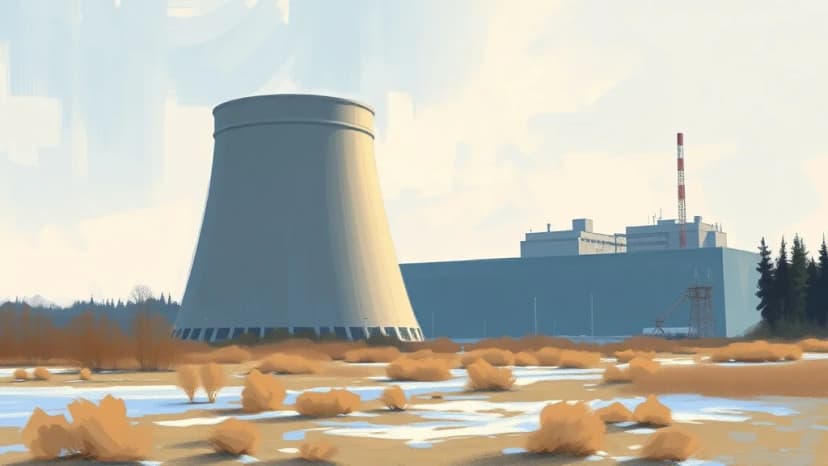
Hinkley Point C, which received approval in 2022 after a lengthy proposal process that began in 1982, is projected to open by 2031 and is expected to generate approximately 7% of the UK's electricity in the 2030s. However, the cost of construction has soared to an astonishing £46 billion, nearly double that of comparable plants in France and Finland. This substantial figure is partly attributed to the UK’s stringent planning laws, which mandate, for instance, the installation of an "acoustic deterrent" to protect aquatic life—an initiative whimsically dubbed the "fish disco."
In the past twelve years, there have been seven legal challenges related to these nuclear projects, with six of them tied to planning issues. The ongoing delays have seen Hinkley Point C suffer 866 days of disruption since August 2022, while Sizewell C has faced 827 days of similar challenges, including a lingering legal dispute over additional coastal flood defenses. Initially estimated at £20 billion, the cost of Sizewell C has now ballooned to £38 billion, with the government poised to become its largest equity shareholder.
The last time a new nuclear plant was completed in the UK was 1987, raising concerns about the country’s nuclear energy capability. Shadow Energy Secretary Claire Coutinho emphasized the necessity for growth through reliable energy sources, advocating for the construction of more nuclear facilities.
Despite the challenges, a spokesperson from the Department for Energy Security and Net Zero asserted a commitment to reversing the historical stagnation in nuclear power development, citing efforts to modernize regulations and secure substantial investments. Recent agreements, including a landmark deal for Sizewell C and a collaborative effort with the U.S. to expedite nuclear project licensing, indicate a strategic move towards revitalizing the nuclear sector in Britain.

Comments