
Discovery of Natural Hydrogen Source in Albania Advances Global Energy Transition
A significant hydrogen source found 950 meters deep in Albania's Bulqizë mine could play a pivotal role in decarbonization efforts. This discovery highlights the potential of white hydrogen, which may offer a cost-effective alternative to traditional hydrogen production methods, crucial for reducing carbon emissions.
 Theia Market Signal Identification - AI Assisted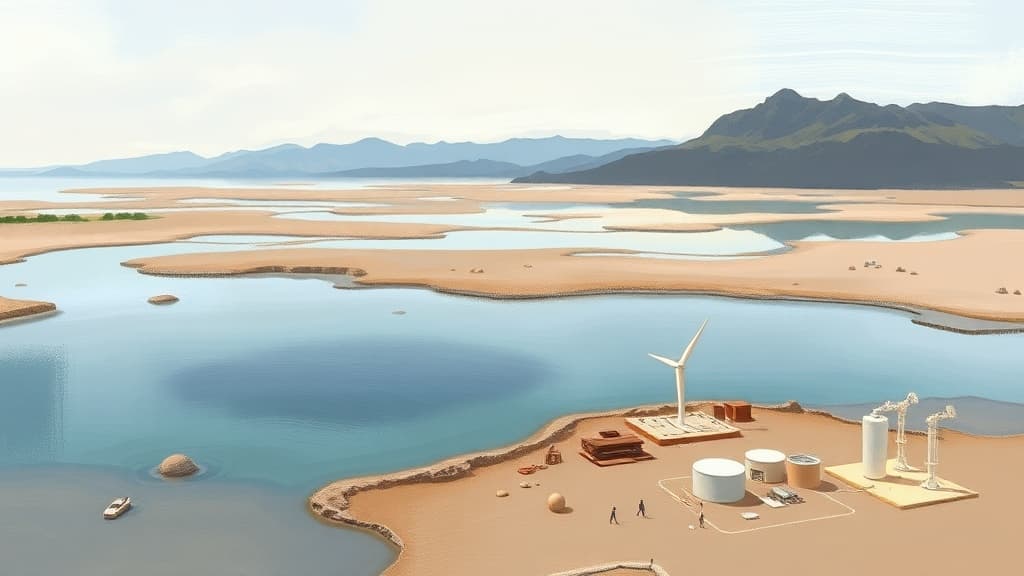
Researchers from France and Albania have discovered a substantial natural hydrogen source in the Bulqizë chromite mine, located 950 meters underground. This site releases approximately 200 tons of natural hydrogen annually, significantly exceeding other known ophiolite deposits, with estimates of total reservoir capacity between 5,000 and 50,000 tons.
The emergence of white hydrogen, produced through natural geological processes, presents an economic advantage with production costs of $0.50 to $1 per kilogram, compared to $4 to $6 for green hydrogen. This finding has spurred international interest in natural hydrogen reserves, particularly in North America and Australia, as nations increasingly seek alternatives to fossil fuels.
While the Bulqizë discovery serves as a proof of concept, technical challenges remain for commercial extraction. The transition to white hydrogen could reduce production costs significantly and support the hydrogen economy's projected growth, which could meet 18% of global energy demand by 2050.



Comments