
Fourth Sentinel-1 Satellite, Sentinel-1D, Arrives for Launch Preparation in French Guiana
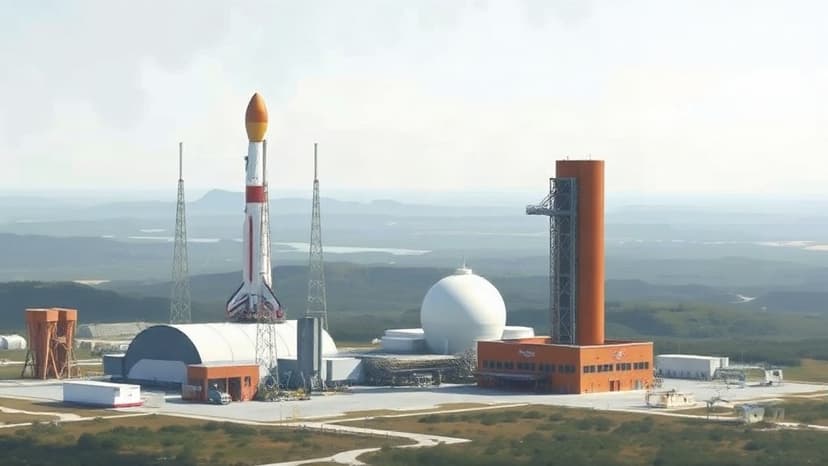
The Sentinel-1D satellite, the fourth in the Copernicus Sentinel-1 mission, has arrived at Félix Éboué Airport in French Guiana. It is set to undergo launch preparations at the European Spaceport in Kourou before its upcoming launch aboard an Ariane 6 rocket. The Sentinel-1 mission provides essential radar imagery, contributing to environmental management and climate change research. With previous satellites having successfully supported various scientific studies, Sentinel-1D will continue this vital work once launched later this year.
 Theia Market Signal Identification - AI Assisted
The arrival of the Sentinel-1D satellite at Félix Éboué Airport in French Guiana marks a significant milestone in the Copernicus Sentinel-1 mission. Safely housed in its protective casing, this satellite will be transported to the European Spaceport in Kourou for launch preparations, setting the stage for its upcoming liftoff on the Ariane 6 rocket, with a date yet to be confirmed.
This mission is pivotal for the Copernicus program, as it continues to deliver crucial radar images of Earth's surface, operational in all weather conditions, day and night. Such capabilities are integral to managing environmental challenges, understanding climate change impacts, and enhancing public safety.
The data provided by Sentinel-1 has been instrumental in various scientific inquiries, from analyzing flooding beneath the Greenland ice sheet to assessing devastating wildfires in South America's vulnerable forests and tracking ground movements following significant earthquakes. The mission has also measured one of the largest methane emissions linked to human activities.
As Sentinel-1D prepares for its launch, it will undergo an array of meticulous activities to ensure operational readiness. The Copernicus Sentinel-1 mission comprises a constellation of two identical satellites, positioned 180 degrees apart in the same orbit, optimizing global data coverage and delivery.
The journey began with the launch of Sentinel-1A in April 2014, followed by Sentinel-1B in 2016. Unfortunately, the latter's mission concluded in August 2022 due to a technical failure, though it has since been deorbited safely. Sentinel-1C was launched in December 2024 to fill the gap left by its predecessor.
Ramón Torres, the mission director at the European Space Agency (ESA), emphasized the importance of this launch, noting that it represents a momentous achievement for the entire space community. Simonetta Cheli, ESA's director of Earth observation programs, echoed this sentiment, praising the strong partnership between ESA and the European Commission that has enabled the continued success of the Copernicus program. The vital radar data provided by Sentinel-1 has proven invaluable across various applications, from emergency responses to scientific research, underscoring its critical role in society's efforts to address climate-related challenges.

Comments