
French Researchers Develop Microclimate Model for Floating PV Systems
French researchers have developed a microclimate model for large floating photovoltaic (PV) systems, focusing on factors like wind-dependent heat transfer and evaporation patterns. The high-resolution framework, validated through experimental methods, reveals significant temperature gradients and turbulence effects related to wind. This model can also be adapted for ground-mounted systems but is not suitable for offshore applications.
 Theia Market Signal Identification - AI Assisted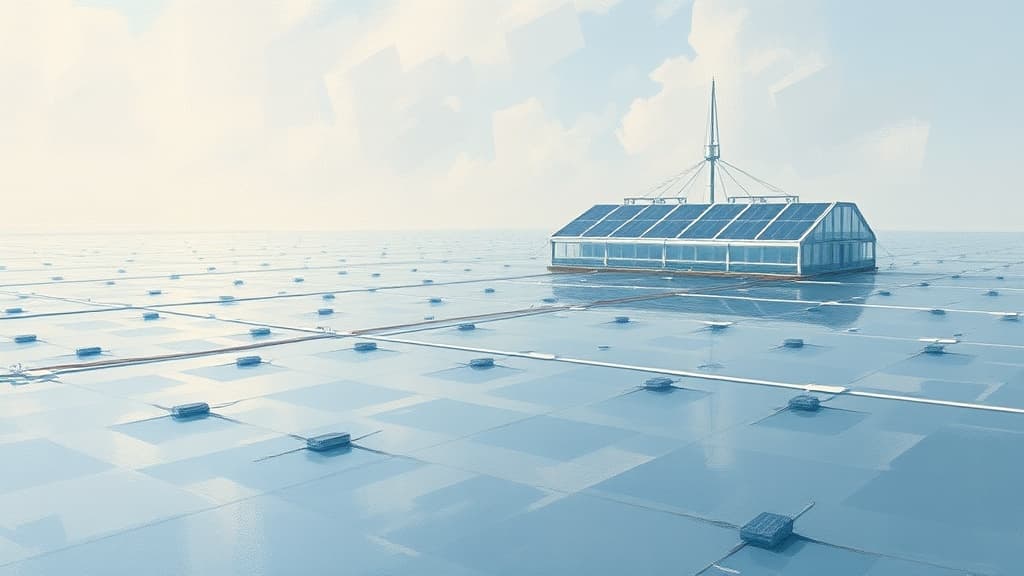
French researchers have created a framework to model microclimate effects on large floating PV systems. This model determines wind-dependent convective heat transfer coefficients, ambient temperatures, and evaporation patterns based on tilt angles, module heights, and pitch distances.
The methodology features a high resolution of about 4 meters, allowing for detailed mapping of thermal performance and insights into local environmental effects. The researchers employed a computational fluid dynamics (CFD) precursor model and validated it through experimental surveys and a wind-tunnel setup.
Findings indicate temperature gradients from 1.3 C/km to 5.8 C/km and highlight turbulence generated by wind relative to PV modules. The model can be adapted for large ground-mounted systems and agrivoltaics but is not suitable for offshore FPV. The study is published in Renewable Energy, with contributions from Ecole nationale des ponts et chaussees, Electricité de France RD, and Université Claude Bernard.


Comments