
Germany and India Seek Cooperation in Green Hydrogen Development
Germany and India are collaborating on green hydrogen development, with India aiming to produce 5 million tons annually by 2030 under its National Green Hydrogen Mission. This partnership, potentially bolstered by upcoming political visits, seeks to enhance Europe's energy security through standards for certification and digital product passports, as well as the H2Global initiative to secure long-term demand. Additionally, India may assist Europe’s fertilizer needs via green ammonia production, supported by the India-Middle East-Europe Economic Corridor framework.
 Theia Market Signal Identification - AI Assisted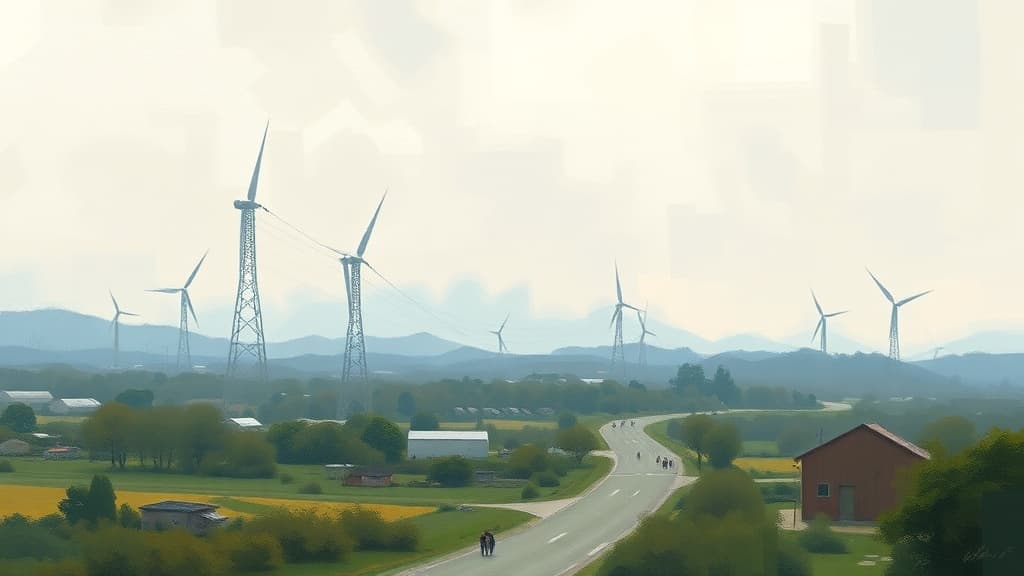
India aims to produce at least 5 million tons of green hydrogen annually by 2030 as part of its National Green Hydrogen Mission, necessitating significant investments in renewable energy. The country is positioning itself as a reliable partner, focusing on market creation and attracting private investments through tenders and demand aggregation.
Germany's political actions, particularly under Merz's upcoming visit, may catalyze a German-Indian cooperation that could enhance Europe’s energy security. The partnership could involve establishing standards for certification and digital product passports, facilitating market access for Indian projects.
The H2Global initiative, launched in 2021, aims to secure demand for green hydrogen through long-term contracts, linking producers with European buyers. Furthermore, India could support Europe’s fertilizer needs through green ammonia production. The India-Middle East-Europe Economic Corridor (IMEC) is highlighted as a strategic framework for enhancing energy and industrial connectivity.
Comments