
Henry Kaiser's Impact on U.S. Aircraft Carrier Production During WWII
Between 1943 and 1944, the U.S. launched 50 aircraft carriers, a feat led by industrialist Henry Kaiser. This rapid production was crucial during WWII, demonstrating the potential of mass production in military logistics.
 Theia Market Signal Identification - AI Assisted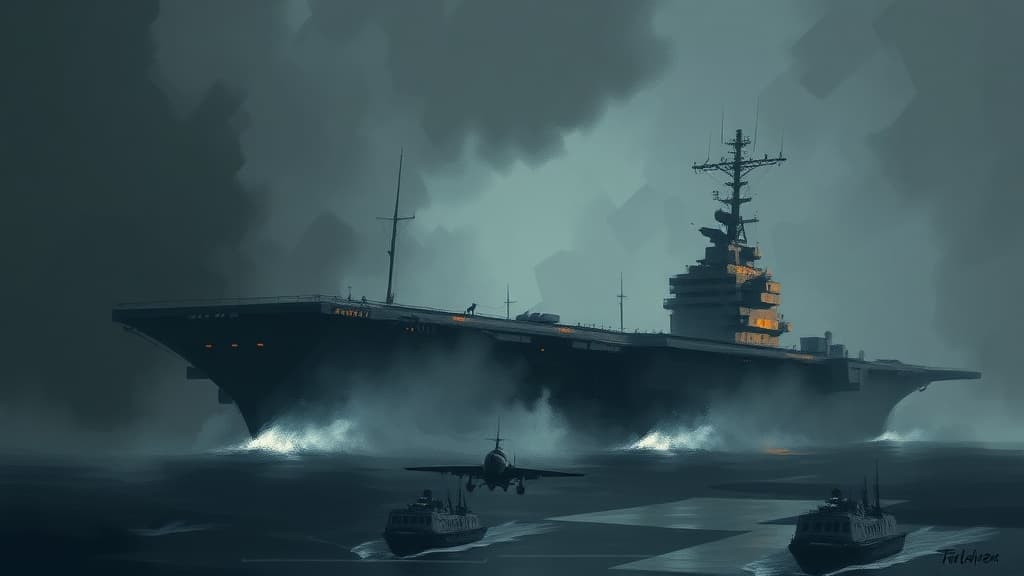
In 1943 and 1944, an American shipyard produced 50 aircraft carriers, achieving a peak output of nearly one per week. Henry J. Kaiser, an industrialist without prior warship experience, utilized mass production methods from cargo ship construction, overcoming Navy skepticism.
The escort carriers, known as Casablanca-class, were essential for providing air cover for convoys and amphibious landings. Despite their vulnerability, the carriers played a pivotal role during the Battle of Leyte Gulf, where they successfully engaged a larger Japanese fleet. This industrial achievement contrasts sharply with current U.S. shipbuilding capacity, raising concerns about the ability to replicate such output in future conflicts.


Comments