
India's CSIR-NAL Developing 90-Day Endurance Solar-Powered UAV for Stratospheric Operations
India is developing a solar-powered UAV, the High Altitude Pseudo-Satellite (HAPS), capable of 90-day endurance at 20 km altitude. Led by CSIR-NAL, this UAV features a solar energy system and a secondary battery for extended flight. It can serve telecommunications, border surveillance, and disaster response, with initial tests reaching 11 hours of flight. Operational deployment is targeted for 2027.
 Theia Market Signal Identification - AI Assisted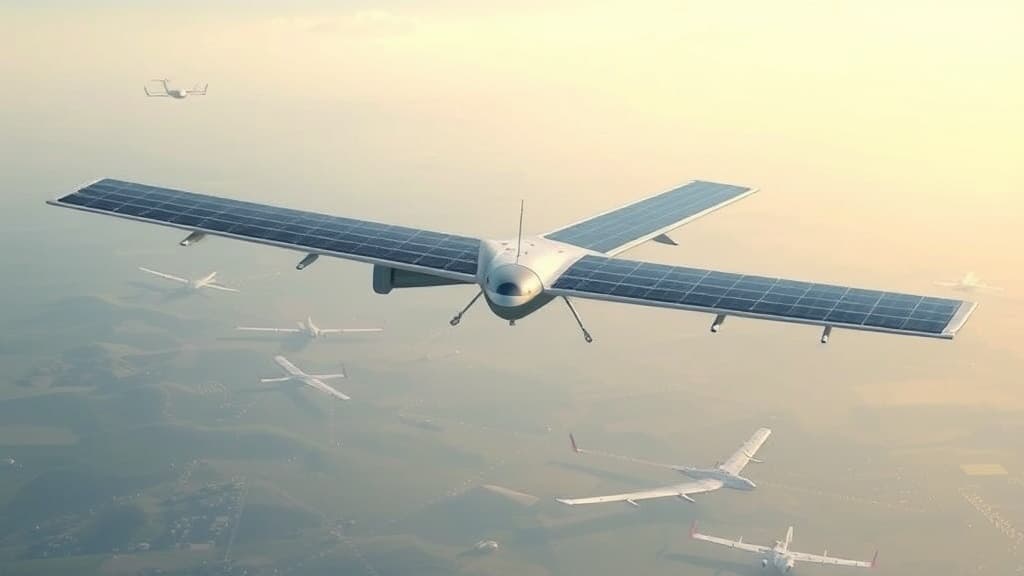
India's CSIR-National Aerospace Laboratories (NAL) is developing a solar-powered UAV known as the High Altitude Pseudo-Satellite (HAPS), designed to operate at 20 km altitude with a flight endurance of up to 90 days. This UAV integrates a solar energy system and secondary batteries for extended operation, distinguishing it from conventional UAVs.
The HAPS platform, with a wingspan over 30 meters and a weight of approximately 150 kg, is engineered for energy efficiency and is expected to provide reliable performance for telecommunications, border surveillance, and emergency response. Initial testing has shown an 11-hour flight at 25,000 feet, with operational deployment planned for 2027.




Comments