
India's Logistics Sector Targets Decarbonization and Green Initiatives by 2030
India's logistics sector is aiming for decarbonization to achieve Net-Zero emissions by 2070, with a focus on reducing its 13.5% contribution to the country's GHG emissions. Strategies include increasing rail freight's share to 45% by 2030, modernizing fleets with Electric Vehicles and alternative fuels, and investing in Green Hydrogen for long-haul trucking. Despite challenges like reliance on fossil fuels and infrastructure limitations, the sector is poised for a transition to a low-carbon logistics network, led by initiatives from companies like TCI.
 Theia Market Signal Identification - AI Assisted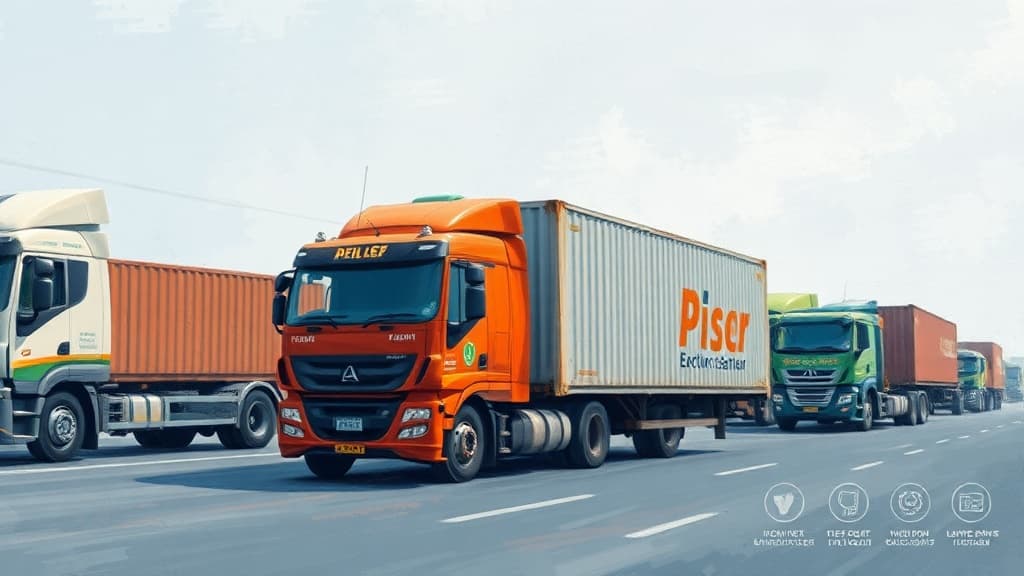
The Indian logistics sector is focusing on decarbonization as part of its commitment to achieve Net-Zero emissions by 2070. Logistics accounts for approximately 13.5% of India's GHG emissions, with road transport responsible for over 88% of this.
Key strategies include shifting cargo to lower-carbon modes like rail and inland waterways, aiming to increase rail freight's share to 45% by 2030. The sector is also modernizing fleets with Electric Vehicles (EVs) and alternative fuels like Compressed Natural Gas (CNG) and Liquefied Natural Gas (LNG).
Investments in Green Hydrogen are planned for long-haul trucking. Challenges include reliance on fossil fuels, high transition costs, and infrastructure limitations for EVs. While policy support exists, fragmentation and data gaps hinder progress.
In the short term, emissions may peak around 2030, followed by a decline, as digital platforms enhance efficiency. Long-term prospects include the Hydrogen Revolution and increased rail freight capacity, with TCI leading the transition to a low-carbon logistics network.




Comments