
India's National Policy on Geothermal Energy Aims to Unlock Renewable Potential
India's new national policy on geothermal energy seeks to explore the commercial viability of this renewable resource, attracting interest from research firms in the U.S., Iceland, and Norway. The policy, announced by the Ministry of New and Renewable Energy, supports research and pilot projects in regions like the Gulf of Cambay, Arunachal Pradesh, and Uttarakhand. With an estimated geothermal potential of 10.6 gigawatts, the initiative aims to reduce energy costs and provide heating in remote areas. Challenges remain, including high upfront costs, but financial support and technological collaborations are being explored.
 Theia Market Signal Identification - AI Assisted
India is setting its sights on harnessing geothermal energy as part of its ambitious renewable energy agenda. The newly unveiled national policy on geothermal energy aims to explore this clean, sustainable energy source, building on the growing interest from research firms in the U.S., Iceland, and Norway. Santosh Kumar Sarangi, secretary of the Ministry of New and Renewable Energy, highlighted the potential for research and development, particularly in regions such as the Gulf of Cambay, Arunachal Pradesh, and Uttarakhand, where pilot projects are already underway.
Geothermal energy, which taps into the Earth’s natural heat through hot springs and subterranean reservoirs, offers a dual benefit: it can generate electricity and provide heating. The Geological Survey of India has identified 381 hot springs with temperatures ranging from 35°C to 89°C, which the new policy seeks to explore further. Notably, the Himalayan geothermal province, alongside regions in Gujarat and the Andaman and Nicobar Islands, holds significant untapped potential.
Despite the global geothermal capacity standing at less than 17 gigawatts, with the U.S., Indonesia, and the Philippines leading the way, India’s geothermal potential is estimated at 10.6 gigawatts, with projections suggesting it could grow to 4.2 gigawatts by 2035 and nearly 100 gigawatts by 2045. This potential is particularly crucial for remote areas where traditional energy sources are costly. For instance, in the Andaman and Nicobar Islands, electricity costs could drop from ₹30-32 per unit to below ₹10-11 through geothermal energy.
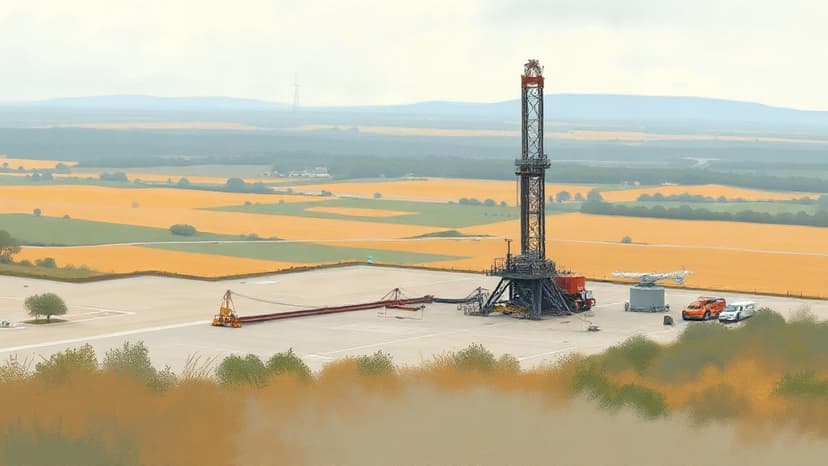
The policy also emphasizes collaboration, with plans to engage American and Indonesian companies for enhanced geothermal systems. Additionally, the initiative explores the possibility of repurposing abandoned oil wells for geothermal energy, tapping into existing infrastructure to boost capacity. In Barmer, Rajasthan, a project is underway to retrofit non-productive oil wells, showcasing innovative approaches to energy generation.
However, the transition to geothermal energy isn't without its challenges. High upfront costs—approximately ₹36 crore for developing just one megawatt of capacity—pose significant barriers. The policy aims to mitigate these risks through financial support for research and development, alongside a viability gap funding scheme to streamline collaboration across multiple stakeholders, including state governments.
The path forward will require proving commercial feasibility, and the Ministry has already sanctioned five projects, including one in partnership with Vedanta. The formation of a task force in August 2024 underscores the government’s commitment to advancing geothermal energy exploration. With careful planning and investment, geothermal energy could emerge as a crucial component of India's renewable energy landscape, offering a reliable solution for both electricity generation and heating needs in some of the country's most challenging environments.



Comments