
India's Renewable Energy Strategy in Response to EU Carbon Tax and Data Center Demand
India's Ministry of New and Renewable Energy is developing strategies to align with EU carbon tax standards while expanding its renewable energy capacity, projected to meet the anticipated 12 GW demand from data centers by 2030. The country is focusing on hydrogen use in steel production and enhancing renewable energy in energy-intensive sectors, supported by significant investments in battery and pumped storage projects. As of June 2025, India's renewable energy capacity reached 266 GW, with plans for deeper integration into the energy mix by 2030.
 Theia Market Signal Identification - AI Assisted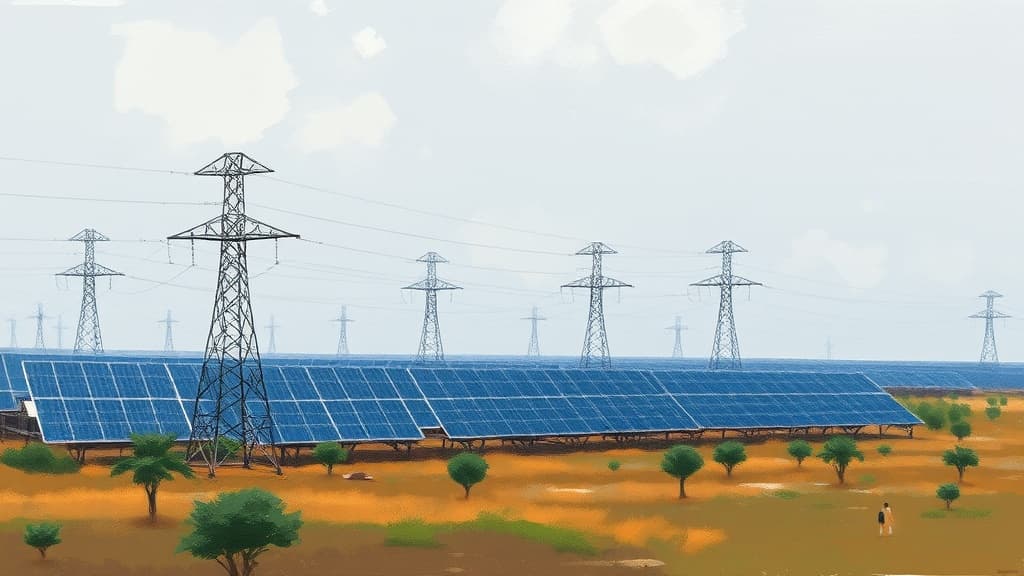
India's Ministry of New and Renewable Energy reports that the country is exploring various strategies to meet EU carbon tax norms while increasing renewable energy (RE) capacity. The Central Electricity Authority (CEA) projects that data centers will demand around 12 GW by 2030, with a likely combination of conventional power and RE sources until full transition is achieved.
The International Solar Alliance (ISA) will focus on solar energy deployment in regions like the Middle East and Africa despite the US withdrawal. India's decarbonization efforts include using hydrogen in steel production and increasing RE use in energy-intensive sectors such as aluminum and cement.
The renewable sector is transitioning to reliable power sources through battery storage and pumped storage projects, with significant investments underway. India's RE capacity reached 266 GW as of June 2025, aiming for deeper integration into the energy mix by 2030.




Comments