
Korean Air Initiates Cargo Strategy Post-Asiana Merger Completion
Korean Air is set to reshape its cargo operations after its merger with Asiana Airlines on December 17, enhancing its infrastructure and leveraging its expanded passenger network. The new strategy emphasizes the integration of belly capacity and freighter operations to meet growing demand for technology-related cargo.
 Theia Market Signal Identification - AI Assisted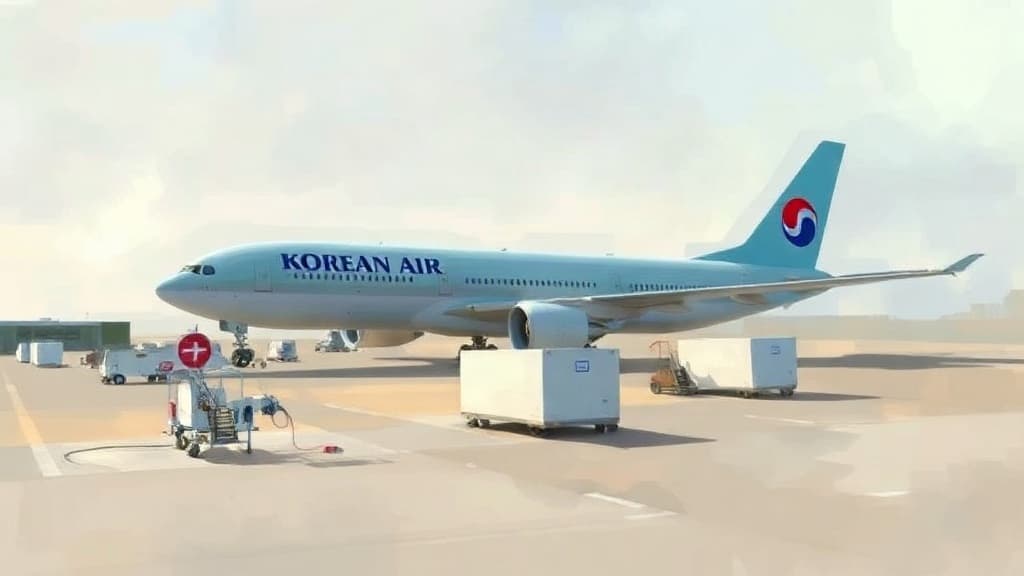
Korean Air plans to enhance its cargo operations following the integration with Asiana Airlines, set for December 17. The airline will leverage increased passenger belly capacity alongside its freighter network to handle diverse cargo types, particularly emphasizing technology-related shipments.
Infrastructure investments include automation and temperature-controlled facilities at Incheon and JFK airports, aimed at improving efficiency and processing speed for sensitive cargo like semiconductors and pharmaceuticals. The use of AI and IoT technologies will support interoperability, enhancing supply chain visibility. By integrating these systems, Korean Air aims to optimize cargo flow and adapt its operations to the demands of transpacific technology trade, positioning itself strategically in the market while maintaining a focus on digital connectivity.


Comments