
Liberian Registry Showcases Maritime Innovation with Nine New Approvals at Gastech
At the Gastech event in Milan, the Liberian Registry, the world's largest shipping registry, announced nine Approvals in Principle (AIPs) developed in collaboration with South Korean and Japanese partners. These approvals encompass advanced projects such as autonomous LNG carriers, wind-assisted propulsion, and next-generation nuclear propulsion systems, underscoring the registry's commitment to maritime innovation and sustainability.
 Theia Market Signal Identification - AI Assisted
In a significant demonstration of its leadership in maritime innovation, the Liberian Registry unveiled nine Approvals in Principle (AIPs) during the prestigious Gastech event in Milan. This announcement solidifies its reputation as the world's largest shipping registry while emphasizing its commitment to sustainability.
The AIPs, developed in collaboration with esteemed South Korean and Japanese industry partners alongside major classification societies, encompass a diverse range of cutting-edge joint development projects. These projects include automated and autonomous LNG carriers equipped with advanced navigation systems, wind-assisted propulsion designs for LNG carriers, and the first commercial nuclear propulsion concept in the form of a small modular reactor-powered LNG carrier.
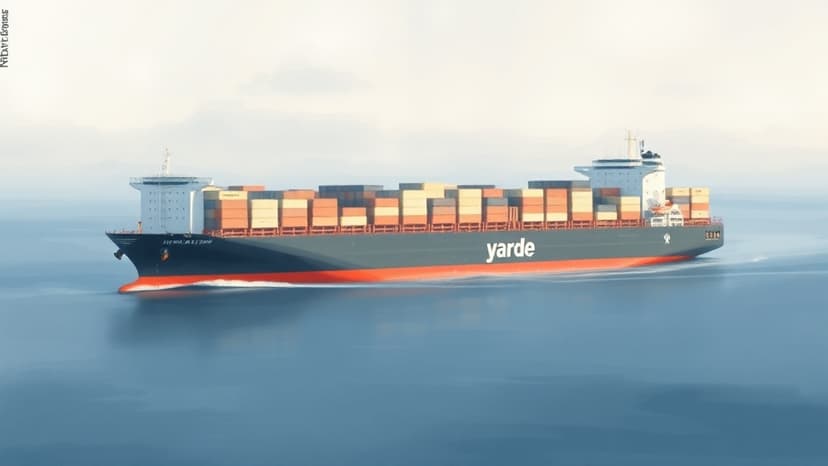
Alfonso Castillero, CEO of the Liberian Registry, highlighted the significance of these approvals, stating, "We are not just anticipating the future of shipping; we are actively building it." This proactive approach sees the registry working alongside global partners to transform revolutionary technologies from concept to reality on the high seas. The awarded AIPs also feature innovative solutions aimed at reducing emissions, such as boil-off gas treatment systems to minimize environmental impact at berth, and next-generation high-pressure LNG fuel tanks designed for large container vessels.
The Liberian Registry’s innovation energy transition team, which played an integral role in this initiative, included notable figures such as Thomas Klenum, executive vice president, J.S. Kim, managing director of LISCR Korea, and T.K.
Im, technical manager of LISCR Korea. Their collaborative efforts reflect a dedication to advancing fuel efficiency, emissions reduction, and smart ship technologies, reinforcing the registry's pivotal role in the maritime industry's evolution.


Comments