
Middle East bets big on hydrogen, sealing Saudi-Europe export deals
The oil-rich Middle East is rapidly positioning itself as a supplier of green hydrogen to the world. Saudi Arabia's ACWA Power has inked agreements with European partners to develop a hydrogen export corridor, even as the region's flagship project, NEOM, nears completion amid questions over buyers. These moves highlight a pivot from oil to hydrogen and the global linkages being forged to make it happen.
 Theia Market Signal Identification - AI Assisted
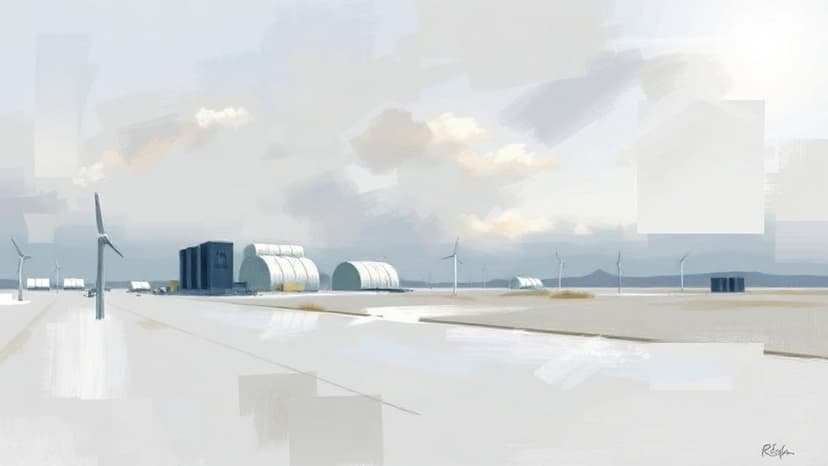
In the futuristic planned city of NEOM on the Red Sea, construction crews have achieved 80% completion on what will be the world's largest green hydrogen plant[44][45]. Massive air separation units, electrolysis stacks, and ammonia converters are being installed to turn sunlight and wind into 600 tons of carbon-free hydrogen a day by 2026.
Yet a cloud looms over this $8.4 billion Saudi showcase: Who will buy all that hydrogen? So far, only one firm – the project's own offtaker-investor, Air Products – is committed to take the ammonia that NEOM will produce[44][46].
International demand for green hydrogen remains "weaker than expected," and Bloomberg has reported developers may slow the project's full ramp-up unless more buyers emerge[46]. It's a classic build-it-and-they-might-come conundrum.
Saudi Arabia isn't waiting passively for customers, though. In late July, Saudi utility developer ACWA Power struck a series of agreements with European partners aimed at creating a green hydrogen export value chain from the Middle East to Europe[47][48].
Under one deal, ACWA and Germany's EnBW will jointly develop the first phase of a green hydrogen hub in Yanbu on Saudi's Red Sea coast, slated to start commercial operations by 2030[49][50]. Another memorandum of understanding (MoU), involving Italy's Edison, France's TotalEnergies, Belgium-based developer Zhero Europe, and again EnBW, will assess the feasibility of dedicated renewable energy projects in Saudi Arabia for export[48].
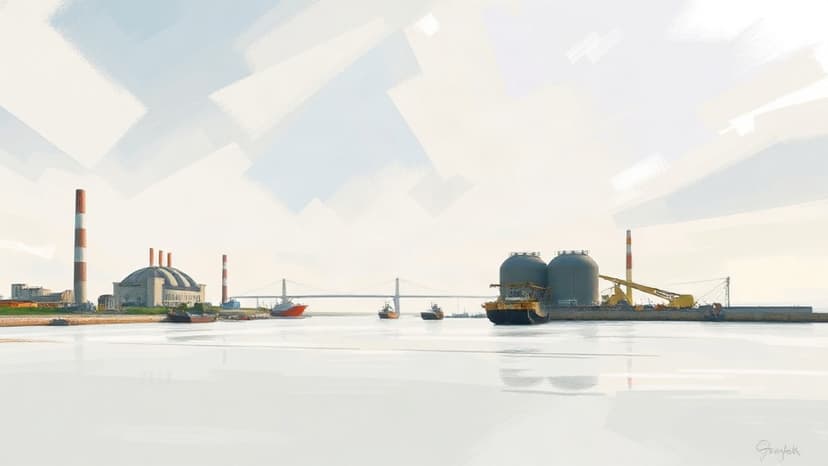
The vision is to generate green electricity in the kingdom's sunny deserts and windy coasts, and send it to Europe – potentially via undersea cables or by converting it into hydrogen/ammonia and shipping it[51]. In effect, it sketches out a "Saudi-Europe green energy corridor."
To support that corridor, ACWA also inked individual MoUs with technical firms – including Italy's grid company CESI, cable maker Prysmian Group, U.S.-based GE Vernova, Germany's Siemens Energy, and Japan's Hitachi Energy – to develop the transmission infrastructure needed[52]. This could mean high-voltage subsea power lines or advanced conversion of green power to hydrogen carriers.
Saudi Arabia's Energy Ministry is backing these initiatives, signalling high-level political will to make the kingdom a global clean energy supplier[49]. "This collaborative framework will assess market demand and feasibility" of large-scale exports to Europe, an industry report noted, emphasizing the aim of establishing a reliable supply route[51].
The Middle East's interest in hydrogen is hardly limited to Saudi Arabia. Across the region, countries see a chance to leverage abundant renewable resources to produce clean fuels. The Middle East is forecast to produce about 17.6 million tonnes of hydrogen annually by 2030 (mostly "green" from renewables and some "blue" from natural gas with carbon capture), with around 0.8 million tonnes earmarked for export to global markets[53].
Mega-projects are underway: the UAE is building large solar-powered electrolyzers, Oman has plans for green ammonia plants, and Qatar is exploring blue hydrogen tied to its LNG facilities. But Saudi Arabia, with NEOM and ACWA's deals, has vaulted to the front of the pack in forging international partnerships.
These developments mark a pivot for a region synonymous with oil. Just as Gulf states once invested in refineries and pipelines to serve distant oil customers, now they are investing in hydrogen hubs and subsea cables for future energy trade.
Europe, for its part, is hungry for clean hydrogen to meet climate goals and reduce reliance on Russian gas – but it can't produce enough at home, making Middle Eastern imports attractive. The new Saudi-European agreements could lay the groundwork for the first significant intercontinental green hydrogen corridor.
Challenges abound (from technical losses in transport to ensuring the hydrogen is truly "green"), but the direction is set. As NEOM's project head recently noted, these efforts will "position [the country] as a future green energy hub" for the world[54][55]. In the sands of Arabia, the hydrogen age is dawning, backed by deals that span continents and signal a profound shift in global energy flows.

Comments