
Nigerians Shift from Public Power to Solar Energy Amid Persistent Blackouts
Nigerians are increasingly turning to solar energy as a reliable alternative to the inconsistent public electricity supply, driven by ongoing power outages and dissatisfaction with past electricity providers. This shift is particularly notable in areas like Adamo and Ikorodu, where households and businesses are adopting solar power to reduce dependence on costly diesel generators. Despite initial installation costs, the long-term savings and convenience of solar energy are encouraging widespread adoption, positioning it as a potential primary energy source for many Nigerians.
 Theia Market Signal Identification - AI Assisted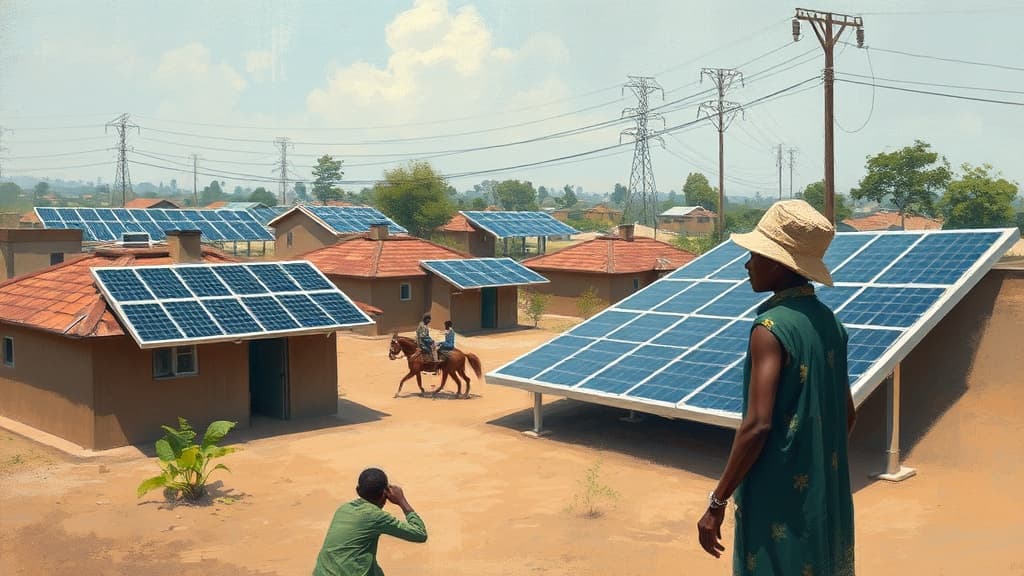
Nigerians are increasingly adopting solar energy as a viable alternative to unreliable public electricity due to ongoing power outages. The transition follows decades of dissatisfaction with the National Electric Power Authority (NEPA) and its successor, the Power Holding Company of Nigeria (PHCN), both of which failed to provide consistent power supply.
Many households, especially in areas like Adamo, Ikorodu, have resorted to solar power after experiencing prolonged blackouts. Solar energy is seen as a cost-effective solution, reducing dependence on diesel generators and the associated expenses of fuel.
Businesses are also benefiting, with solar installations enabling operations without relying on public power. While the initial cost of installation remains a concern, the overall savings and convenience offered by solar energy are driving its adoption. The trend suggests a future where solar power becomes the primary energy source for many Nigerians, offering a sustainable solution to the nation’s power challenges.


Comments