
Rethinking Water Access: Dutch Clean Tech's Innovative Approach to Financing Clean Water Infrastructure
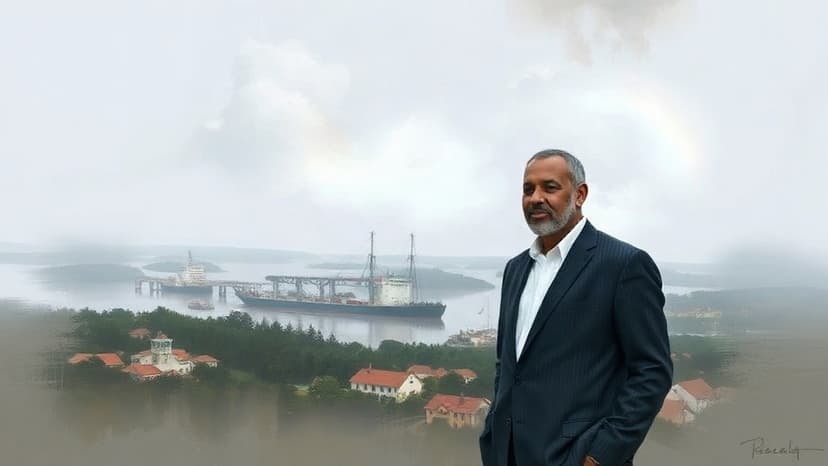
Sander Pielkenrood, CEO of Dutch Clean Tech, argues that the water crisis stems not from scarcity but from a lack of access to clean water. The company has transformed from a traditional technology supplier into a cleantech investment platform, focusing on financing water infrastructure rather than selling equipment. Their model, which operates purification systems while local governments pay for clean water, generates stable returns for European investors. With projects underway in Mexico, Guatemala, and Oman, Dutch Clean Tech aims to scale its impact globally while making clean water financially sustainable.
 Theia Market Signal Identification - AI Assisted
In a world increasingly aware of its water challenges, Sander Pielkenrood, the CEO and founder of Dutch Clean Tech, provocatively suggests that the issue is not the scarcity of water but rather the accessibility of clean, drinkable water. His family's legacy in designing purification systems, which dates back to 1962, has pivoted dramatically. Rather than merely selling equipment, Dutch Clean Tech has evolved into a platform that redefines ownership and access to water, fostering an innovative investment model aimed at financing water infrastructure.
This transformation has seen the company take on the responsibility of installing and operating purification systems directly, operating under a model where local governments and industries pay for access to clean water. European investors fund the infrastructure, earning a steady return of around nine percent. Pielkenrood likens this approach to solar leasing, illustrating how a sharing economy model can be applied to one of humanity's most essential resources.
Dutch Clean Tech's initiatives are already in motion across diverse regions. In Mexico, the company is addressing the ecological disaster caused by the influx of sargassum seaweed, developing systems that not only collect this disruptive organism at sea but also convert it into energy via biogas installations.
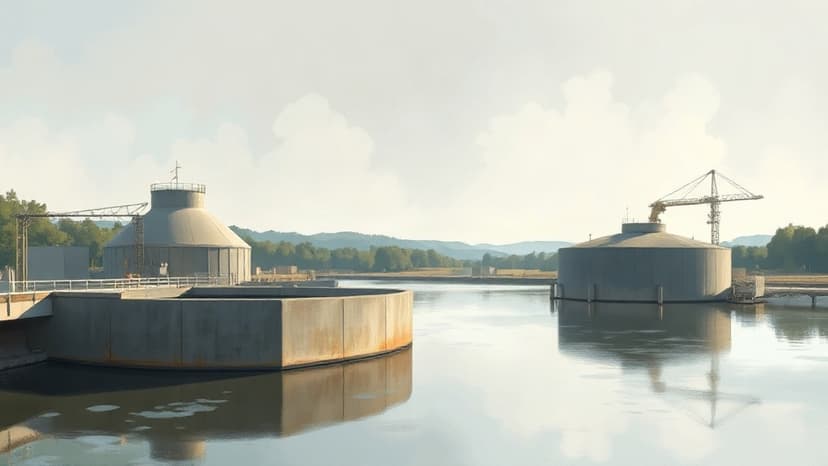
Simultaneously, they are modernizing outdated sewage plants, transforming a crisis into an opportunity for a circular economy. In Guatemala, they are establishing purification plants to support millions reliant on fragile water infrastructure, and in Oman, they are implementing large-scale industrial wastewater treatment solutions. These projects are not mere pilots; they generate revenue while delivering tangible environmental and social benefits.
To further accelerate its growth, Dutch Clean Tech is establishing a fund structure based in Luxembourg, designed to attract both institutional and retail investors across Europe. Pielkenrood notes that the maturation of impact investing has created a demand for strong governance and predictable cash flows, which Luxembourg's framework can provide.
As the climate tech funding landscape becomes increasingly competitive, Pielkenrood believes that Dutch Clean Tech's differentiation lies in its unique blend of legacy engineering expertise and innovative financing strategies. While many startups in the sector promise impact, he points out that they often lack proven business models. In contrast, Dutch Clean Tech combines decades of know-how with a financing framework that ensures consistent returns, establishing itself as a credible player in the market.
Looking to the future, Dutch Clean Tech has set ambitious goals for scale. Over the next five years, the company aims to operate hundreds of installations globally, reinforcing the idea that clean water should not rely on charity or subsidies. By making water access an investable asset, they hope to create systemic change that delivers impactful solutions at scale.
For investors, this approach represents a unique opportunity to access a rare asset class—clean water infrastructure—that is both profitable and transformative. Pielkenrood concludes that sustainable impact becomes truly unstoppable when it is grounded in financial sustainability, paving the way for a future where clean water is accessible to all. Currently, Dutch Clean Tech is inviting European investors to join this mission, offering them a chance to align stable returns with meaningful environmental impact.

Comments