
SoftBank and Intel Collaborate on ZAM Memory with Japanese Government Support
SAIMEMORY, a SoftBank subsidiary, is developing ZAM memory with Intel, receiving significant subsidies from Japan's NEDO. This initiative aims to innovate power-efficient memory for AI workloads, enhancing Japan's semiconductor industry amid rising global demand.
 Theia Market Signal Identification - AI Assisted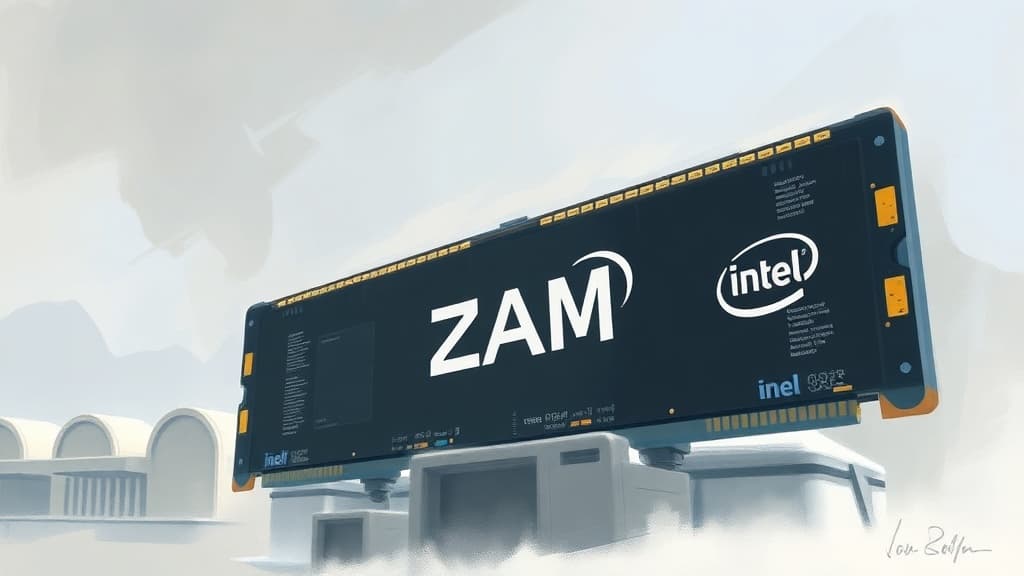
SAIMEMORY, a subsidiary of SoftBank, is collaborating with Intel on the ZAM memory technology, designed as a power-efficient alternative to high-bandwidth memory (HBM) for AI applications. The New Energy and Industrial Technology Development Organization (NEDO) of Japan has selected this project for government subsidies, which are expected to cover a substantial portion of development costs over a 3.5-year program.
ZAM promises to improve effective density, increase bandwidth, and reduce power consumption by around 40% compared to traditional HBM. With mass production aimed for 2029, this project could help Japan re-establish its footing in the semiconductor market, currently dominated by Taiwan and South Korea. However, the technology is still in early prototype stages, raising execution risks.




Comments