
Solar Power Surpasses Grid Electricity Prices in Nigeria, Transforming Energy Landscape
Solar power in Nigeria has become more affordable than electricity from the national grid, with costs dropping to N85-N140 per kilowatt-hour compared to grid prices of N220-N270. This shift is driven by rising operational costs for gas-fired plants and the establishment of new solar mini-grids, which promise predictable pricing and significant long-term savings. As Nigeria's energy landscape transforms, solar installations are increasingly seen as a viable solution for energy independence amidst economic challenges.
 Theia Market Signal Identification - AI Assisted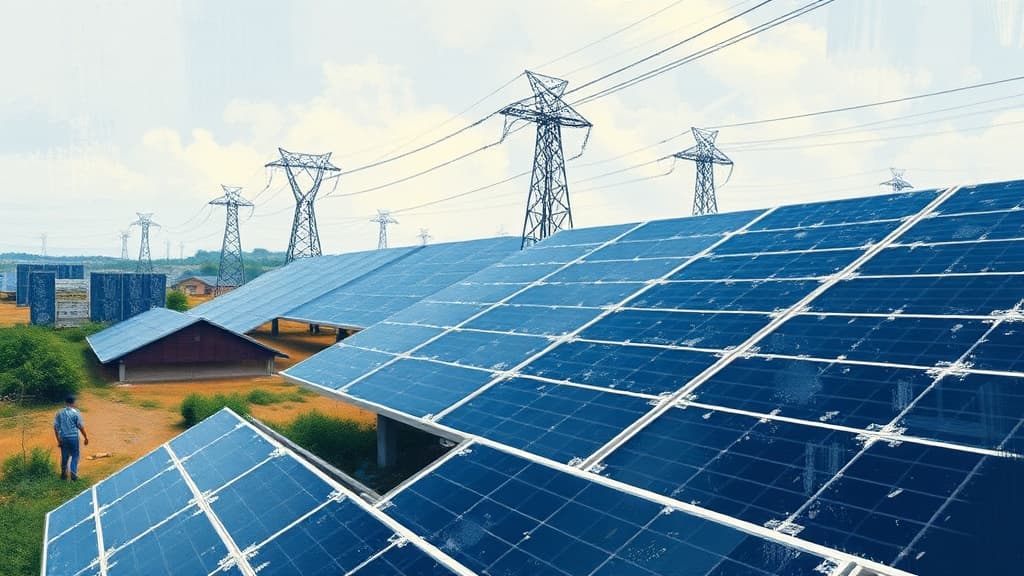
Solar power has become cheaper than electricity from Nigeria's national grid for the first time, with grid costs rising to N220-N270 ($0.14-$0.17) per kilowatt-hour, more than double previous rates. In contrast, solar installations generate power at N85 to N140 per kilowatt-hour.
Annual fuel costs for gas-fired plants have reached N120 billion to N150 billion, while a 100-megawatt solar project incurs only N1.7 billion to N2.5 billion in operational costs. The shift to solar is accelerating with 170 existing mini-grid networks and 28 new mini-grids planned for completion by Q1 2026.
Solar systems offer predictable pricing, crucial in an economy facing currency devaluation. High-end solar setups can provide near-complete energy independence, while lithium-iron-phosphate batteries enhance reliability. Despite initial costs, savings from solar adoption are significant, suggesting a transformative shift in Nigeria's energy landscape.


Comments