
South Korea's Nuri Rocket: Enhancements with Solid Boosters and OTVs for Deep-Space Missions
The Nuri rocket of South Korea, currently limited to launching 1.5-ton satellites, is exploring the integration of solid boosters to enhance deep-space mission capabilities. This shift is significant for future lunar exploration and could streamline payload transfers with orbital transfer vehicles (OTVs).
 Theia Market Signal Identification - AI Assisted
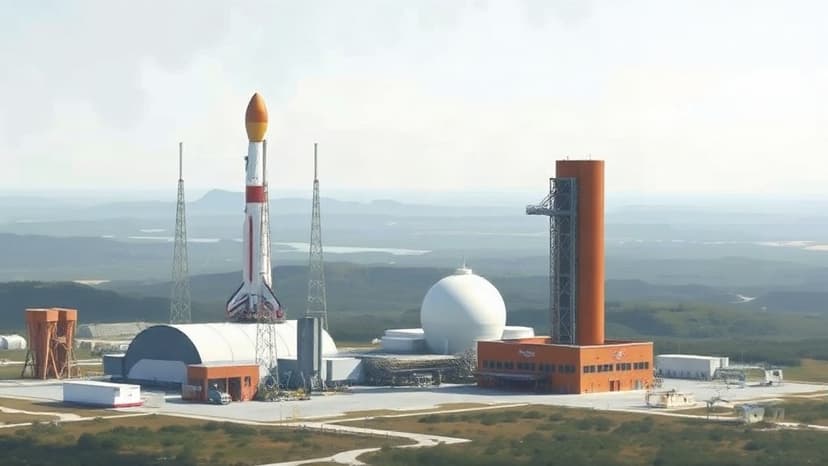
South Korea's Nuri rocket, a liquid-propellant launcher, is considering the addition of solid boosters to enhance its deep-space exploration capabilities. With current performance allowing for 1.5-ton payloads, the integration of two solid boosters could enable the launch of probes up to 800 kg into lunar transfer orbit (LTO), while four boosters could increase capacity to approximately 1.8 tons.
Solid boosters simplify rocket structure and reduce manufacturing costs but complicate thrust control and re-ignition. As solid-propellant launch vehicles are developed, a comprehensive redesign may be necessary for current airframe structures to accommodate the additional load and vibration.
Additionally, the development of an orbital transfer vehicle (OTV) may improve mission flexibility and efficiency. To avoid redundancy and inefficiencies in technology development, a cooperative framework between military and civil aerospace sectors is essential.



Comments