
Study Reveals Ecological Changes from Solar Farm in Qinghai, China
A study by Xi'an University of Technology assessed the environmental impacts of the 1-gigawatt photovoltaic array in Qinghai's Talatan plateau. Findings revealed that solar farms in arid regions not only coexist with ecosystems but actively contribute to the formation of new ones. The research categorized areas into on-site, transitional, and off-site zones, measuring various ecological indicators. Results indicated better ecological conditions within the solar facility compared to surrounding areas. The study highlights the need for quantitative assessments in understanding solar energy's environmental effects.
 Theia Market Signal Identification - AI Assisted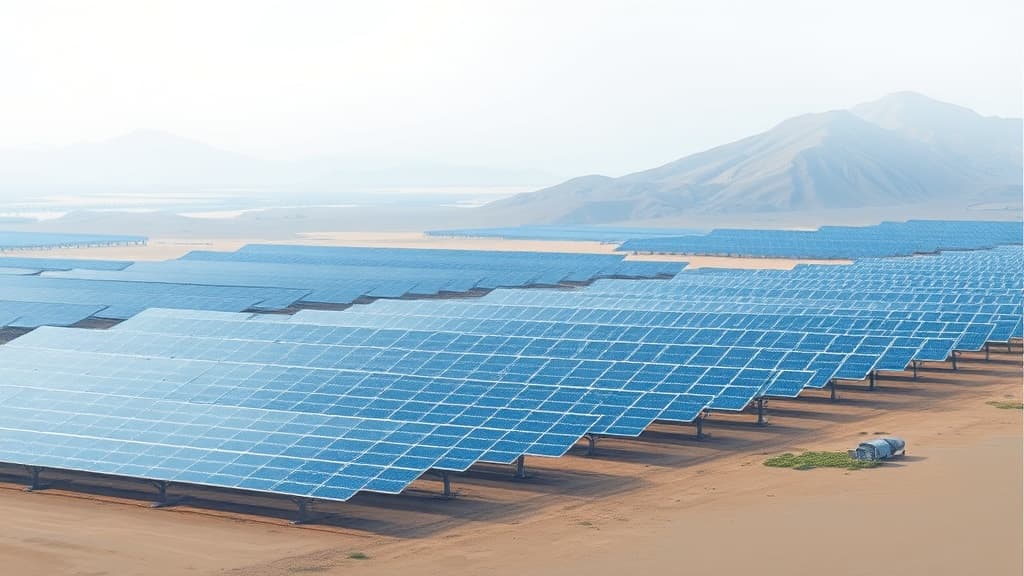
A study conducted by Xi'an University of Technology evaluated the environmental impacts of a 1-gigawatt photovoltaic array in Qinghai Province, China. Researchers monitored vegetation, soil chemistry, and microclimate indicators across on-site, transitional, and off-site areas.
Results showed on-site areas had a better ecological rating (0.439) compared to transitional (0.286) and off-site (0.280) zones, indicating that solar farms actively contribute to ecological changes. The solar installation's design, including panel spacing and height, affects local conditions, potentially enhancing plant survival in arid climates. The facility's specific conditions may limit the applicability of findings to other desert environments.



Comments