
US-China AI Competition Driven by Electric Capacity and Energy Sources
The competition between the US and China for AI supremacy hinges on electric capacity and energy sources. Jensen Huang of Nvidia asserts that low-cost electricity in China supports data centers essential for AI. By 2025, US data centers will consume 4.4% of total electricity, projected to rise to 12% by 2030. Meanwhile, China's energy capacity is growing rapidly, with a shift towards nuclear energy by 2030. Investments in energy infrastructure are crucial, with China planning to spend $560 billion by 2030 to enhance its capabilities.
 Theia Market Signal Identification - AI Assisted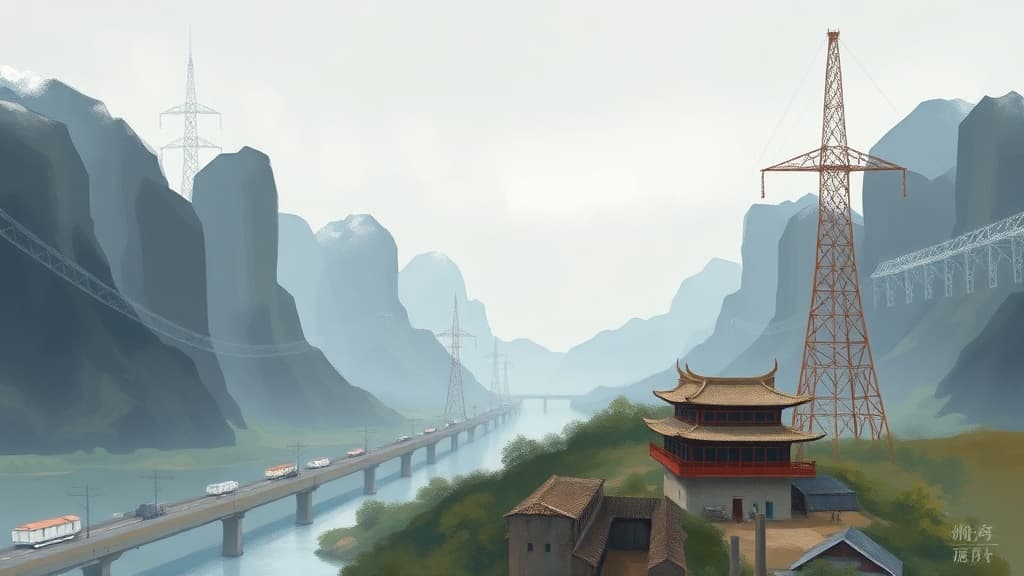
The US-China AI contest is increasingly determined by electric capacity. Nvidia's Jensen Huang claims that China's electricity is effectively 'free,' supporting energy-intensive data centers. McKinsey reports US data centers will use 4.4% of total electricity by 2025, increasing to 12% by 2030, while China's demand from data centers is expected to reach 6% by 2026.
China adds capacity akin to Germany's annual consumption, while US growth is hindered by coal phase-outs and regulatory issues. By 2030, China plans to cover 60% of its energy needs from nuclear, building 34 new reactors.
In contrast, the US faces a potential electricity deficit of 44 gigawatts. Investments in renewable energy projects in the US have stalled under current policies, while China is aggressively pursuing energy infrastructure improvements.

Comments