
US Marine Terminals Face Capacity Challenges Amid Evolving Trade Landscape
US marine terminals are essential for international trade, processing 56 million containers in 2024. Containerization, initiated in 1956, increased cargo handling efficiency but reduced the stevedore workforce by 85%. Current operations differ from global counterparts, with unique chassis handling and limited automation. Future terminal capacity growth is uncertain due to local governance and limited new facilities since 2009. Solutions include modernization, labor rule changes, extended hours, and automation, though cost and union agreements pose challenges.
 Theia Market Signal Identification - AI Assisted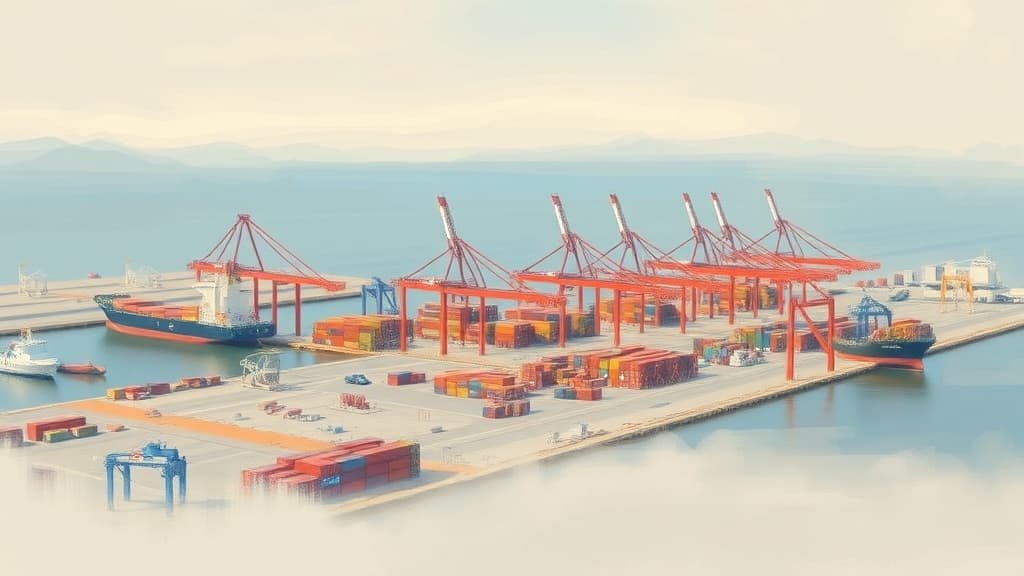
US marine terminals are critical for international trade, handling approximately 56 million containers in 2024. Containerization, introduced in 1956, significantly increased productivity but led to an 85% reduction in the stevedore workforce.
Unique operational practices in the US include carrier-provided chassis and limited automation, contrasting with global 24/7 operations. Future capacity growth is uncertain due to strict local governance and minimal new facility additions since 2009. Potential solutions include modernizing equipment, modifying labor rules, extending operational hours, and implementing automation, though high costs and union agreements present challenges.



Comments