
Brigg Energy Park: A Landmark Step in the UK's Hydrogen Blending Revolution
Brigg Energy Park in North Lincolnshire recently achieved a significant milestone by successfully blending 3% green hydrogen with natural gas, marking the UK's first hydrogen blending trial in peak power generation. This innovative facility combines peaking gas turbines, large-scale battery storage, and a hydrogen production plant, ensuring reliable energy supply amid growing renewable sources. The collaboration among Centrica, Hiiroc, and the Net Zero Technology Centre exemplifies the potential for regional decarbonization, paving the way for future advancements in clean energy solutions.
 Theia Market Signal Identification - AI Assisted
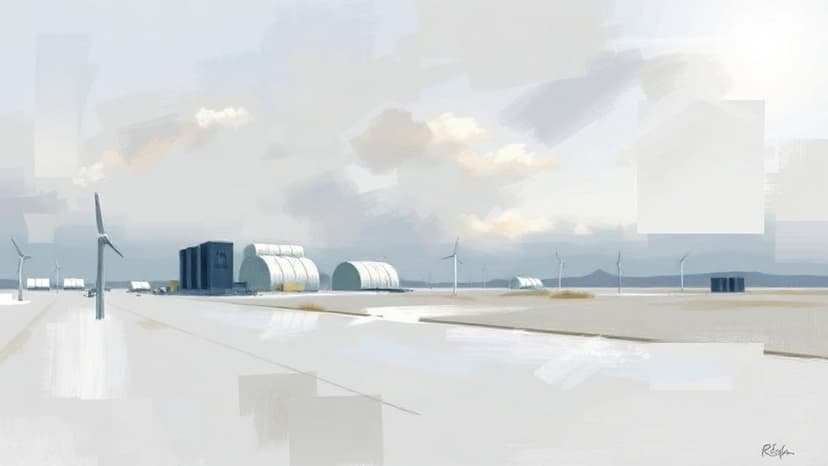
Situated in North Lincolnshire, home to approximately 172,000 residents, Brigg Energy Park has become a pivotal player in the UK’s evolving energy landscape. Historically tied to coal mining and legacy gas plants, this region is now poised to embrace a greener future through a state-of-the-art facility capable of generating 150 megawatts of power. The recent hydrogen blending trial, conducted on September 11, 2025, represented a significant milestone in the journey toward decarbonization, successfully mixing 3% green hydrogen with natural gas for peak power generation.
As the UK continues to ramp up renewable energy from wind and solar sources, the need for flexible backup power becomes increasingly critical. Brigg Energy Park offers a compelling solution by integrating existing gas infrastructure with cutting-edge hydrogen technology.
The trial day was marked by an atmosphere of anticipation as engineers from Centrica, Hiiroc, and the Net Zero Technology Centre monitored real-time data in the control room. At precisely 10:00 AM, operators initiated the blend of 97% natural gas and 3% green hydrogen, powering a Wärtsilä 31 series engine that delivered clean electricity to the national grid while substantially reducing emissions.
This innovative blending approach addresses one of the most pressing challenges associated with renewable energy—intermittency. Brigg's peaking plant is equipped to provide up to 150 MW of backup power, sufficient to supply electricity to around 20,000 typical UK homes for an entire day. Importantly, the hydrogen used in the trial was produced on-site, resulting in zero transport emissions, exemplifying the compact and efficient solutions required for a sustainable energy future.
Central to this achievement is Hiiroc's pioneering thermal plasma electrolysis (TPE), a process that utilizes a plasma arc to convert methane or biomethane into hydrogen and solid carbon. TPE is remarkably efficient, consuming only a fifth of the electricity required for traditional water electrolysis while producing no emissions on-site. The fine carbon by-product generated can be sold to industries, contributing another revenue stream that further enhances the project's sustainability.
Throughout the Brigg trial, the plant successfully generated enough green hydrogen to achieve the 3% blend without relying on external power sources. This independence is vital for distributed energy sites, where balancing supply and demand is essential.
Moreover, the hydrogen produced met the UK’s stringent low carbon hydrogen standards, solidifying its status as a genuinely clean fuel. The support from the Net Zero Technology Centre, which has facilitated over 170 trials and commercialized numerous technologies, underscores the trial's potential to influence regulators and investors alike.
To facilitate the transition to hydrogen, Wärtsilä's hydrogen-ready 31 series turbines are designed to accommodate various fuel mixes seamlessly. During the trial, engineers closely monitored flame stability, exhaust temperatures, and emissions, confirming that even a modest 3% hydrogen blend could yield significant carbon reductions without compromising reliability. These turbines can operate with up to 20% hydrogen from the outset and are capable of handling 100% hydrogen under optimal conditions, allowing for a gradual transition to greener energy sources.
Brigg's success is a testament to collaboration, with Centrica providing power generation expertise, Hiiroc contributing hydrogen technology, and the Net Zero Technology Centre offering crucial research funding and oversight. Local authorities ensured community engagement, allowing local suppliers to benefit from the project, which minimized the need for costly grid upgrades and redirected funds into job training and regional development.
The positive repercussions of this trial are already being felt, as clean energy consultancies develop rollout plans for similar projects, and educational institutions revise curricula to prepare future technicians. Brigg Energy Park's flexibility in energy sourcing enhances resilience against gas outages and price volatility, illustrating how innovation, investment, and policy can converge for widespread benefit.
Looking ahead, industry experts are eager to explore the possibility of increasing hydrogen blend levels to double digits and scaling up deployments nationwide. Achieving higher percentages will entail further testing, regulatory approvals, and infrastructure modifications, but the groundwork has been laid. The UK’s ambitious clean power targets for 2030 now have a tangible example of hydrogen’s essential role in reducing carbon intensity.
Policymakers are taking heed, as regulators revise hydrogen blending standards and funding schemes are optimized for integrated power facilities. For investors seeking impactful and low-risk decarbonization opportunities, Brigg Energy Park stands out as a beacon of progress. By leading in hydrogen blending, the UK is not only positioning itself as a leader in clean energy but also as an exporter of expertise, best practices, and regulatory frameworks to international markets.
Ultimately, the story of Brigg Energy Park transcends mere statistics—its 150 MW capacity and potential to power 20,000 homes underscore the power of partnership and vision. The collaboration among Centrica, Hiiroc, the Net Zero Technology Centre, and Wärtsilä exemplifies the transformative potential when experienced operators, bold innovators, and supportive funders unite. Brigg Energy Park is not merely a forward-looking project; it is a tangible demonstration of how communities can harness innovation to sustain local jobs and safeguard the planet, offering a glimpse into the future of clean, reliable, and flexible power.


Comments