
Casa Pueblo's Solar Microgrids Improve Lives and Energy Independence in Puerto Rico
Casa Pueblo's solar microgrids in Adjuntas, Puerto Rico, are enhancing energy independence for residents like 82-year-old Olga Hernández, reducing reliance on diesel generators amid frequent blackouts. With over 3,000 photovoltaic panels installed, these systems not only support critical medical equipment but also address the urgent need for resilient energy solutions as global warming exacerbates power challenges. The World Bank estimates that 217,000 microgrids are necessary by 2030 to ensure universal access to clean energy.
 Theia Market Signal Identification - AI Assisted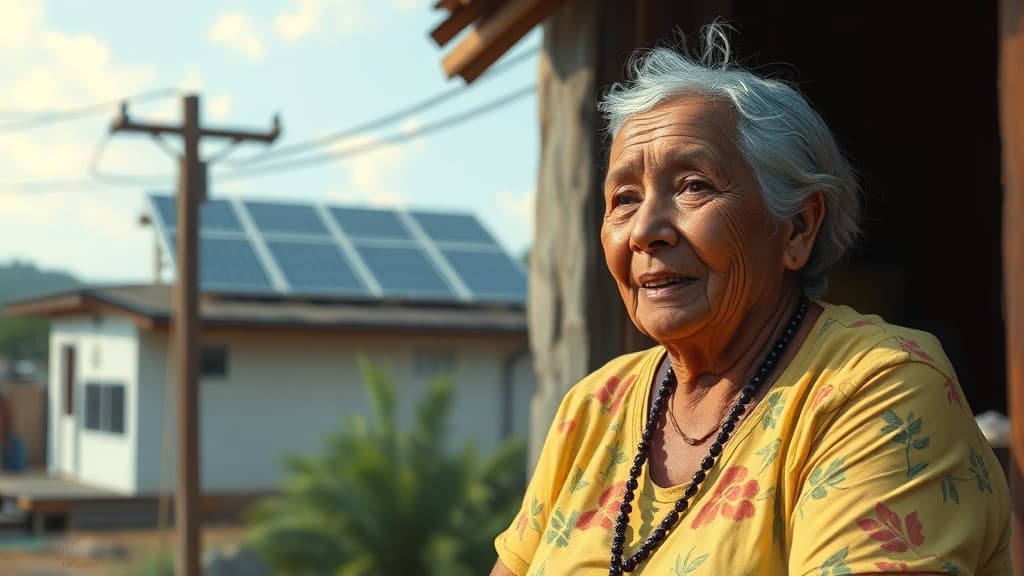
In Adjuntas, Puerto Rico, 82-year-old Olga Hernández relies on solar microgrids for power, eliminating her dependence on diesel generators during outages. Casa Pueblo, a community organization, has established over 3,000 photovoltaic panels across 400 projects, enhancing energy autonomy in the face of frequent blackouts.
In 2024, Puerto Ricans experienced an average of 73 hours of power interruptions, exacerbated by aging infrastructure and hurricanes. The microgrids provide critical support for medical equipment, illustrating their life-saving potential.
The World Bank estimates that 217,000 microgrids are needed by 2030 to replace diesel systems and achieve universal access to clean energy. Meanwhile, in southern Peru, a solar and wind microgrid has successfully provided reliable electricity to the remote fishing village of Laguna Grande since 2016, demonstrating the cost-effectiveness of microgrids in developing regions. As global warming intensifies heatwaves, the urgency for resilient energy systems grows.

Comments