
China Advances Hydrogen Pipeline Transportation with Major Projects and Technological Breakthroughs by 2025
In 2025, China achieved significant progress in hydrogen pipeline transportation, highlighted by the completion of the 1,132 km Ulanqab to Beijing-Tianjin-Hebei pipeline and the construction of the 1,037.82 km Haitai New Energy Kangbao-Caofeidian pipeline. Technological advancements included the development of hydrogen-resistant materials, while supportive policies from the National Energy Administration aim to promote the shift from gray to green hydrogen. These initiatives represent a major step forward in the country's hydrogen infrastructure.
 Theia Market Signal Identification - AI Assisted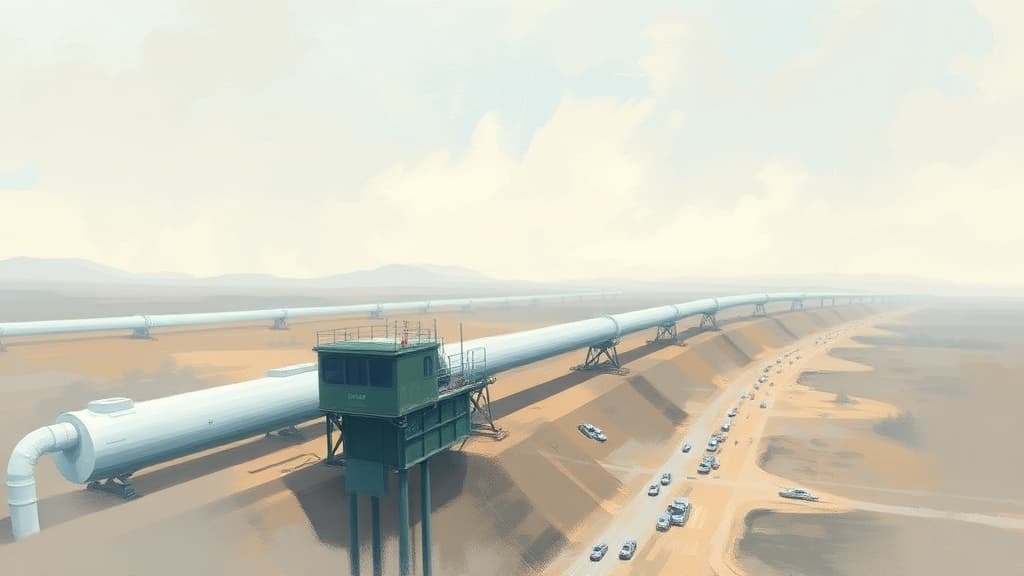
In 2025, China made significant advancements in hydrogen pipeline transportation, marking a period of rapid development. Key projects include the Inner Mongolia Ulanqab to Beijing-Tianjin-Hebei hydrogen pipeline, a 1,132 km long inter-provincial line designed for high-pressure pure hydrogen transport, which passed safety reviews in December.
The Haitai New Energy Kangbao-Caofeidian pipeline, the first of its kind in China, began construction on October 28, with a length of 1,037.82 km and an annual capacity of 1.55 million tons. The Inner Mongolia section of the Ulanqab pipeline was approved in July.
Technological breakthroughs included new hydrogen-resistant pipeline materials developed by Benxi Steel and Baosteel. Policies supporting hydrogen pipeline development were also issued, including the National Energy Administration's guidelines for large-scale hydrogen transportation projects. These initiatives aim to facilitate the transition from gray hydrogen to green hydrogen in major regions.


Comments