
China's Coal Export Ban and Domestic Energy Strategy Amid Global Blackouts
China has increased domestic coal production while halting coal exports amid international pressure, despite pledging to stop building overseas coal power plants. While renewables now make up over 60% of China's energy capacity, coal remains a significant part of consumption, raising concerns about energy stability as global blackouts occur. Experts highlight the necessity for improved grid infrastructure and energy storage to address these challenges, as China's clean energy exports are expected to play a crucial role in reducing global emissions.
 Theia Market Signal Identification - AI Assisted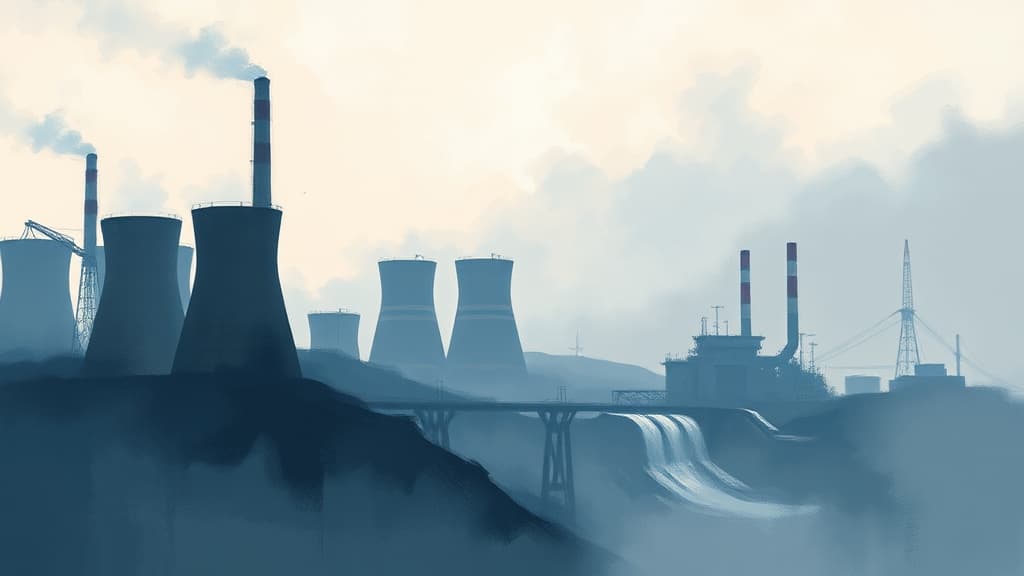
In 2021, China pledged to stop building and financing new coal power plants overseas, celebrated by Western nations. However, while halting coal exports due to international pressure, China has increased its domestic coal production, focusing on advanced, efficient coal units to stabilize its energy grid amid a rapid rise in renewable energy capacity.
As countries like Spain, Portugal, and Chile face blackouts, questions arise regarding the effectiveness of this climate victory. Although renewables represented over 60% of China's energy capacity, coal still accounted for 53.2% of consumption in 2024.
The overseas coal ban has not been fully implemented, with numerous projects still in construction or pending. Experts emphasize the need for improved grid infrastructure and energy storage to mitigate outages, as China's coal technologies remain primarily domestic. China's clean energy exports are projected to reduce global emissions significantly, supporting a shift towards integrated renewable systems.

Comments