
China's Floating Solar Farms Address Water Scarcity and Energy Needs
China's floating solar projects tackle water scarcity and energy generation simultaneously. The Dezhou Dingzhuang facility (320 MW) and the Three Gorges project (150 MW) are the world's largest floating solar installations, demonstrating commercial viability. This technology allows solar panels to be mounted on buoyant platforms over reservoirs, reducing evaporation and improving panel efficiency by up to 10%. Despite concerns about ecological impacts, floating solar capacity already exceeds 3 GW globally, with potential to generate 400 GW from existing water bodies.
 Theia Market Signal Identification - AI Assisted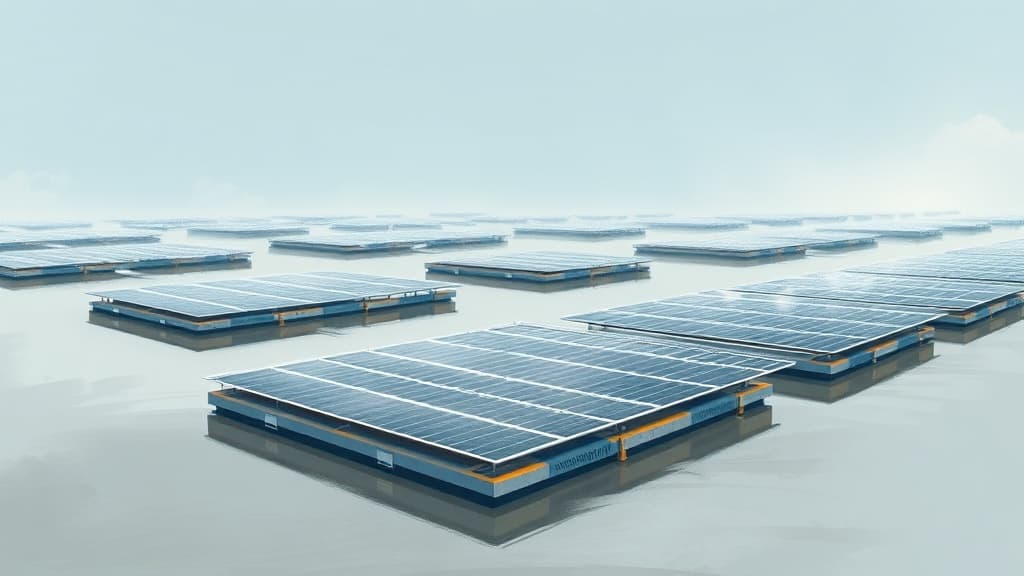
China's floating solar farms, including the 320 MW Dezhou Dingzhuang and 150 MW Three Gorges projects, simultaneously address energy generation and water scarcity. These installations shade reservoirs, reducing evaporation while enhancing solar panel efficiency by up to 10%.
Covering just 1% of artificial water bodies could power 400 million homes globally. Although floating solar capacity exceeds 3 GW, the potential remains vast. However, ecological concerns such as habitat disruption and pollutant release require careful management. The technology represents a shift towards integrated systems that address energy, water, and land use challenges.

Comments