
EU's Carbon Regulations Challenge East Port Said's Shipping Operations
The EU's Emissions Trading System will impose carbon regulations on the shipping industry starting January 2026, affecting East Port Said, Egypt, which is classified as a high-risk transshipment port. With over 65% of its traffic linked to EU routes, shipping lines may find the port less attractive due to the requirement to account for 50% of emissions during stops. Meanwhile, Egypt's initiatives in e-methanol production could support the EU's green fuel goals.
 Theia Market Signal Identification - AI Assisted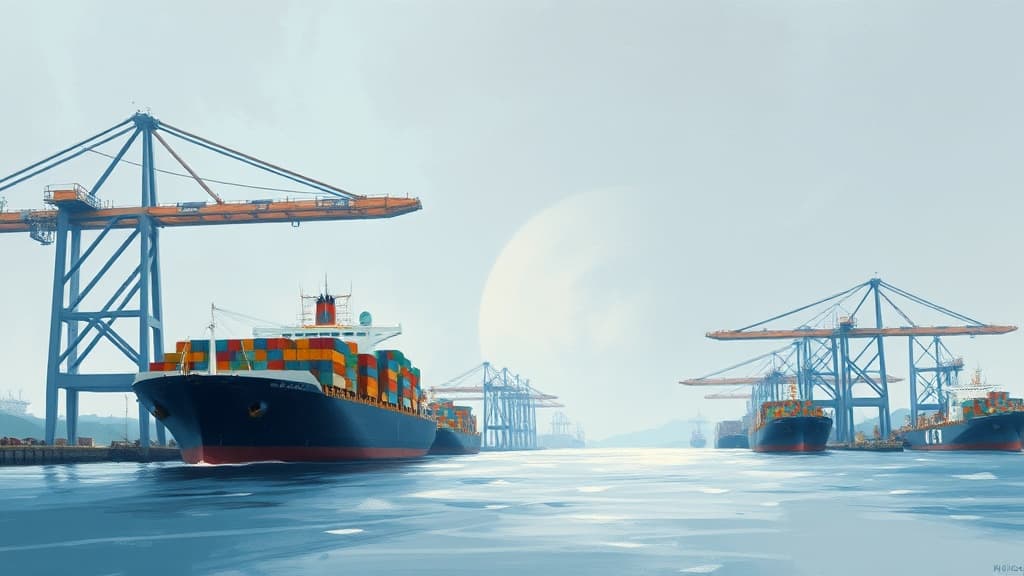
The EU's Emissions Trading System (ETS) will enforce carbon regulations for the shipping industry starting January 2026, covering 100% of emissions for ships within the EU. The ETS requires shipping companies to acquire allowances for emissions on EU voyages and 50% for others.
East Port Said, Egypt, is on the EU's high-risk list of transshipment ports due to over 65% transshipment traffic and proximity to EU ports. This could reduce its attractiveness for shipping lines, as they must account for 50% of emissions when stopping there.
In 2024, East Port Said handled about 4 million TEUs, representing 79% of Egypt's transshipment trade. Other regional ports, like those in Saudi Arabia and the UAE, may benefit as alternatives. Additionally, Egypt's plans for e-methanol production could align with the EU's green fuel ambitions.

Comments