
Evolution of the F-16: From Daytime Fighter to Multirole Combat Aircraft
The F-16 Fighting Falcon, initially designed as a lightweight daytime air superiority fighter, has transformed into a versatile multirole aircraft with significant advancements in capabilities. Key updates include precision-guided munitions, targeting pods, and enhanced avionics, expanding its operational scope beyond air-to-air combat.
 Theia Market Signal Identification - AI Assisted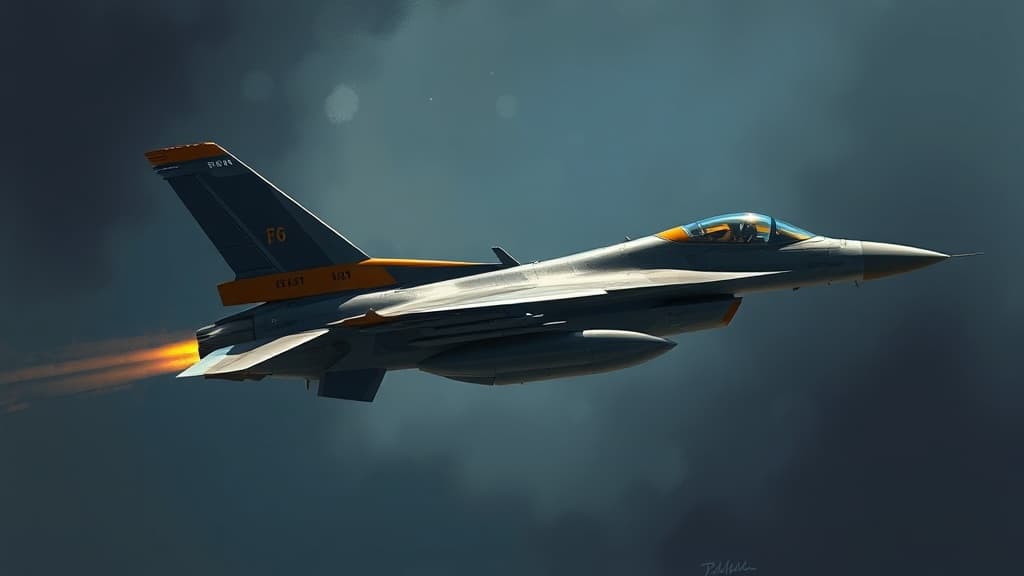
The F-16 Fighting Falcon, developed from the YF-16 prototype that first flew on December 13, 1973, emerged from the Lightweight Fighter program initiated by the U.S. Department of Defense. Designed with relaxed static stability and a digital fly-by-wire system, it was the first operational fighter with full-authority fly-by-wire controls.
Initially intended for air superiority, its design and modernization have enabled it to excel in all-weather and multirole operations, incorporating advanced radar, precision munitions, and electronic warfare systems. The aircraft's introduction in 1980 was bolstered by NATO partnerships, facilitating widespread adoption among European air forces, thus enhancing its production and operational capabilities.



Comments