
Geoscience Australia Explores Adavale Basin for Underground Hydrogen Storage Potential
Geoscience Australia is investigating the Adavale Basin in Queensland as a potential underground hydrogen battery site. The project aims to address renewable energy storage challenges and could power millions of homes. A recent $31 million drilling initiative has collected rock and groundwater samples from the Boree Salt deposit, which may enable the storage of hydrogen deep underground. Initial findings are expected within six months, but local concerns about water safety persist.
 Theia Market Signal Identification - AI Assisted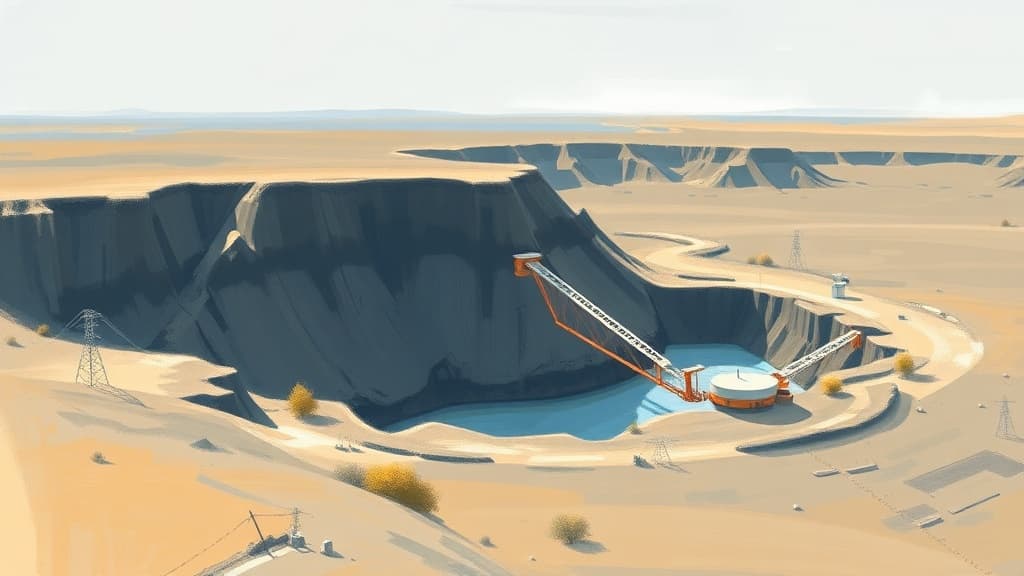
Geoscience Australia is exploring the Adavale Basin in Queensland as a potential underground hydrogen storage solution, which could power millions of homes in eastern Australia. The Boree Salt deposit, discovered in 1958, is the only thick salt layer in eastern Australia suitable for hydrogen storage.
A $31 million drilling project collected samples from a 3-kilometre borehole, with results expected in six months. Each cavern could store around 6,000 tonnes of hydrogen, equivalent to energy from 50 super batteries. Local residents express concerns over water safety, but experts believe the underground storage is safe with proper pressure management.

Comments