
Global Centre for Maritime Decarbonisation Tests Onboard Carbon Capture for Shipping Emissions Reduction
The Global Centre for Maritime Decarbonisation has successfully tested onboard carbon capture technology, demonstrating its potential to reduce shipping emissions by capturing CO2 from a tanker and converting it into materials for steel and cement. However, the process faces challenges, including the need for onboard storage and additional fuel, resulting in only a minimal reduction in lifecycle emissions. The technology's scalability and cost-effectiveness remain uncertain, and current carbon accounting practices may not fully recognize the benefits of utilizing captured CO2.
 Theia Market Signal Identification - AI Assisted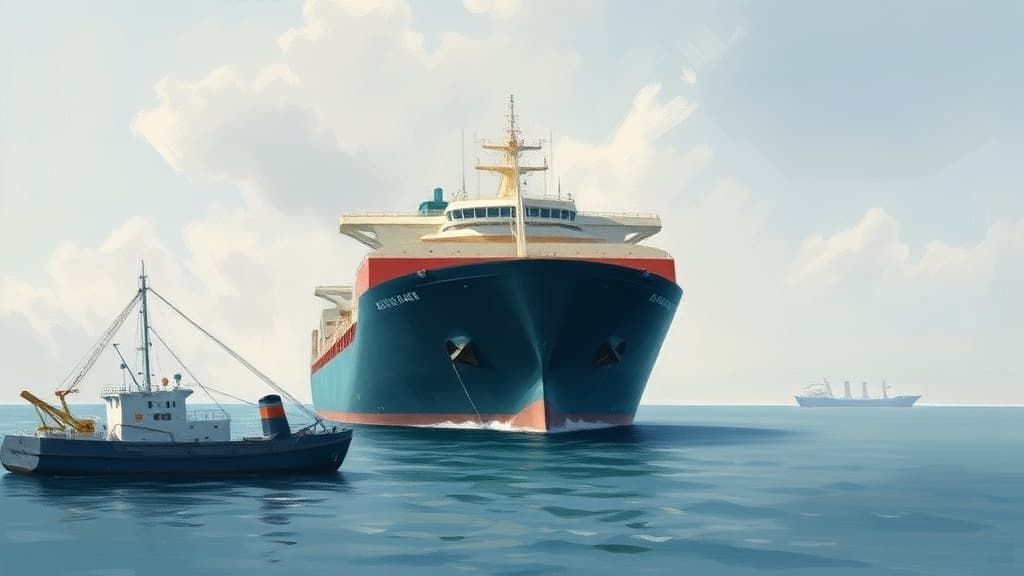
The Global Centre for Maritime Decarbonisation has demonstrated the technical feasibility of onboard carbon capture, which could help reduce greenhouse gas emissions from shipping. In a test, CO2 was captured from a tanker, transported 2,200 km to Inner Mongolia, and converted into materials for steel and cement production.
However, challenges remain, including the need for onboard storage and additional fuel for the system. At a 10.7% carbon capture rate, over half a tonne of CO2 was emitted for each tonne captured, with an additional 375 kg per tonne from transportation, resulting in only 0.3% of lifecycle emissions saved.
Improvements in efficiency and reduced transportation will enhance the business case. Utilizing captured CO2 for products is preferable to underground storage, but current carbon accounting by the International Maritime Organization does not acknowledge these benefits. The viability of scaling this technology and its cost-effectiveness are still in question.



Comments