
Global Space Companies Pursue Fully Reusable Rocket Systems to Reduce Launch Costs
Global space companies are increasingly developing fully reusable rocket systems to drastically reduce launch costs, with estimates dropping from $110-$180 million for single-use rockets to €2-5 million per launch. This trend, led by SpaceX, is fueled by the rise of private firms and the establishment of satellite networks, while traditional companies like Arianespace and Mitsubishi Heavy Industries are investing in recovery infrastructure. As SpaceX refines its technology, Europe lags behind with a focus on smaller rockets and new propulsion systems.
 Theia Market Signal Identification - AI Assisted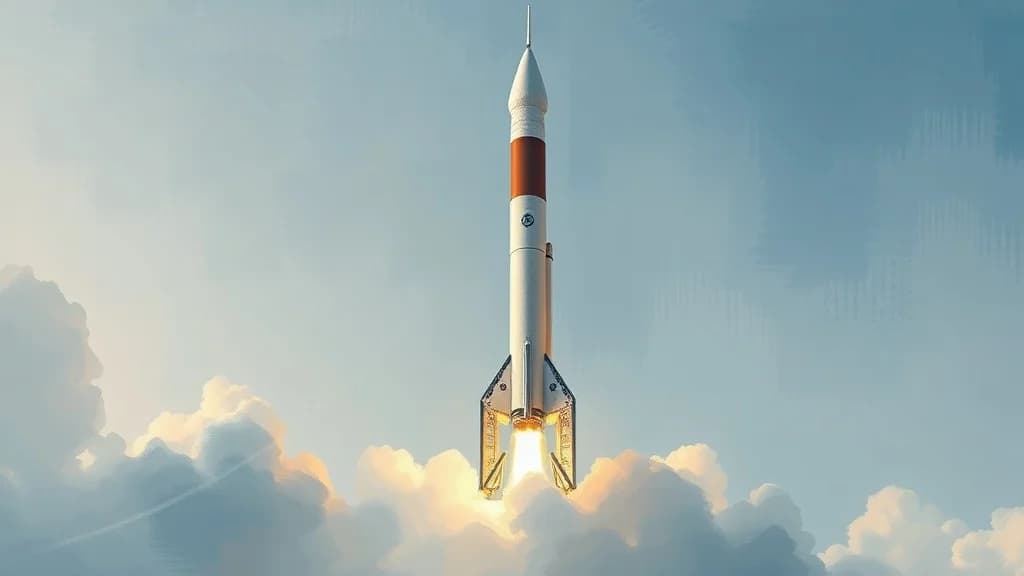
As SpaceX leads the way, more space companies and agencies worldwide are developing fully reusable rockets. This shift aims to significantly lower launch costs from $110-$180 million for single-use rockets to just €2-5 million per launch, according to Taiwan's Trendforce.
The rise of private space firms and the cost reductions achieved by SpaceX have sparked a 'New Space' boom. The establishment of satellite networks like Starlink and Kuiper, along with increased military satellite launches by the US Space Force, further drive this transition.
Established companies like Arianespace, Mitsubishi Heavy Industries, and China Aerospace Science and Technology Corporation are also investing in recovery programs, requiring substantial investments in specialized recovery infrastructure. SpaceX continues to refine its reuse technology, switching from RP-1 kerosene to liquid methane for its Starship second-stage recovery tests to reduce residue and cleaning costs. Meanwhile, Europe lacks operational reusable rockets and focuses on smaller rockets for nanosatellites and new propulsion systems.




Comments