
Hanwha Ocean's Digital Shipbuilding Contrast with US Navy Challenges
Hanwha Ocean employs integrated digital models and real-time data in shipbuilding, highlighting gaps in the US Navy's approach. The Navy's reliance on outdated systems and processes raises concerns about future maritime capabilities and cybersecurity readiness.
 Theia Market Signal Identification - AI Assisted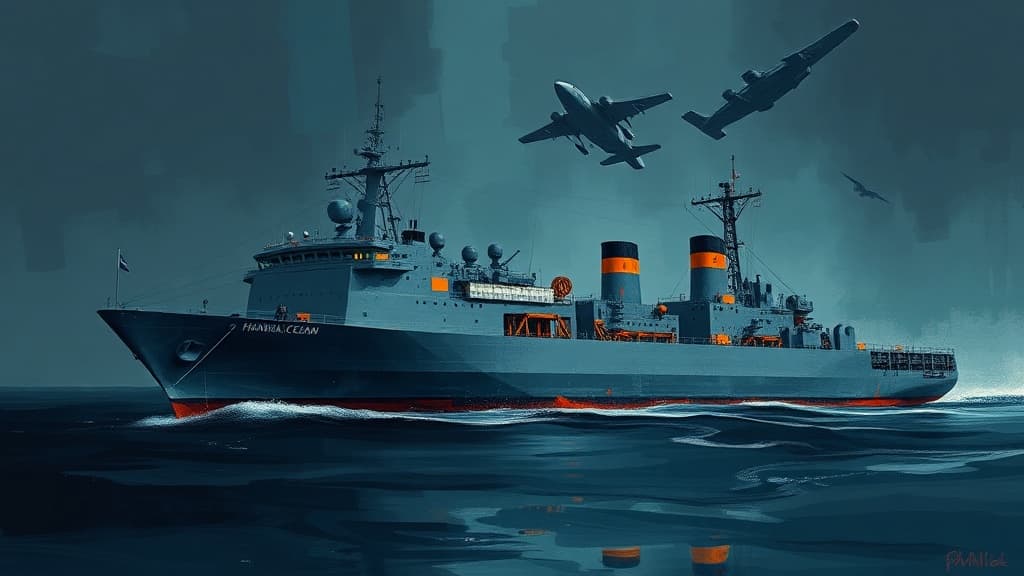
Hanwha Ocean is advancing warship production in South Korea using integrated digital models and robotic inspection. The US Navy's fleet of 75 Arleigh Burke destroyers lacks uniformity in configurations, reflecting a significant competitive disadvantage.
Recent failures in program execution, such as the Constellation-class frigate and the Offshore Patrol Cutter, demonstrate the risks of initiating construction without stable designs. Additionally, delays in the Columbia-class submarine program emphasize the systemic constraints within nuclear shipbuilding.
The Navy's Additive Manufacturing Center of Excellence has shown potential for reducing lead times through digital technical data packages. However, over 200 legacy ships lack digital models, creating challenges in maintaining configuration control.
The urgency for a unified digital thread that encompasses the entire maritime industrial base is paramount, as it facilitates quality assurance and cybersecurity. Congress must prioritize data rights and the right to repair to support the development of a cohesive digital architecture.


Comments